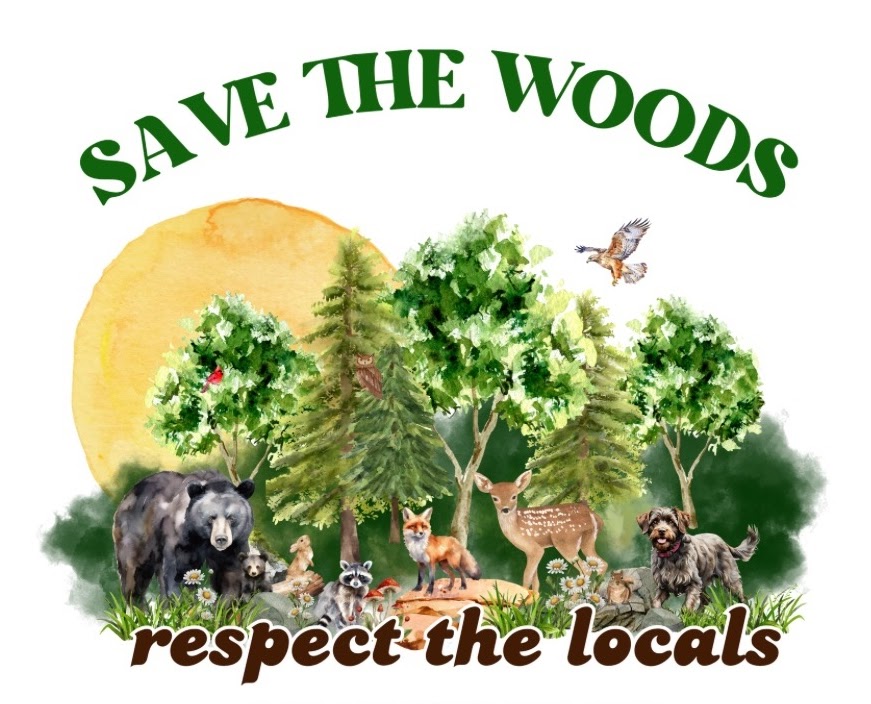
At the sight of the destruction, I audibly gasped, cried out NO!, and fell to my knees in the dirt, sobbing. I was knocked down by overwhelming shock and grief. The UNCA woods, a sacred site in my life for decades, had been ripped up. Wide muddy roads cut where once had been walking trails. Trees and plants and habitat were torn up. Every cell in my body resisted this violation. It just could not be, not after all the trees and wildlife lost to Helene. My heart cannot bear it. But it is true, UNCA has plans to develop one of Asheville’s only urban forests.
Soon after that shocking discovery, I found the Save the UNCA Woods organizing, made calls to UNCA administrators to protest their plans, and shared the campaign with my circle of friends.
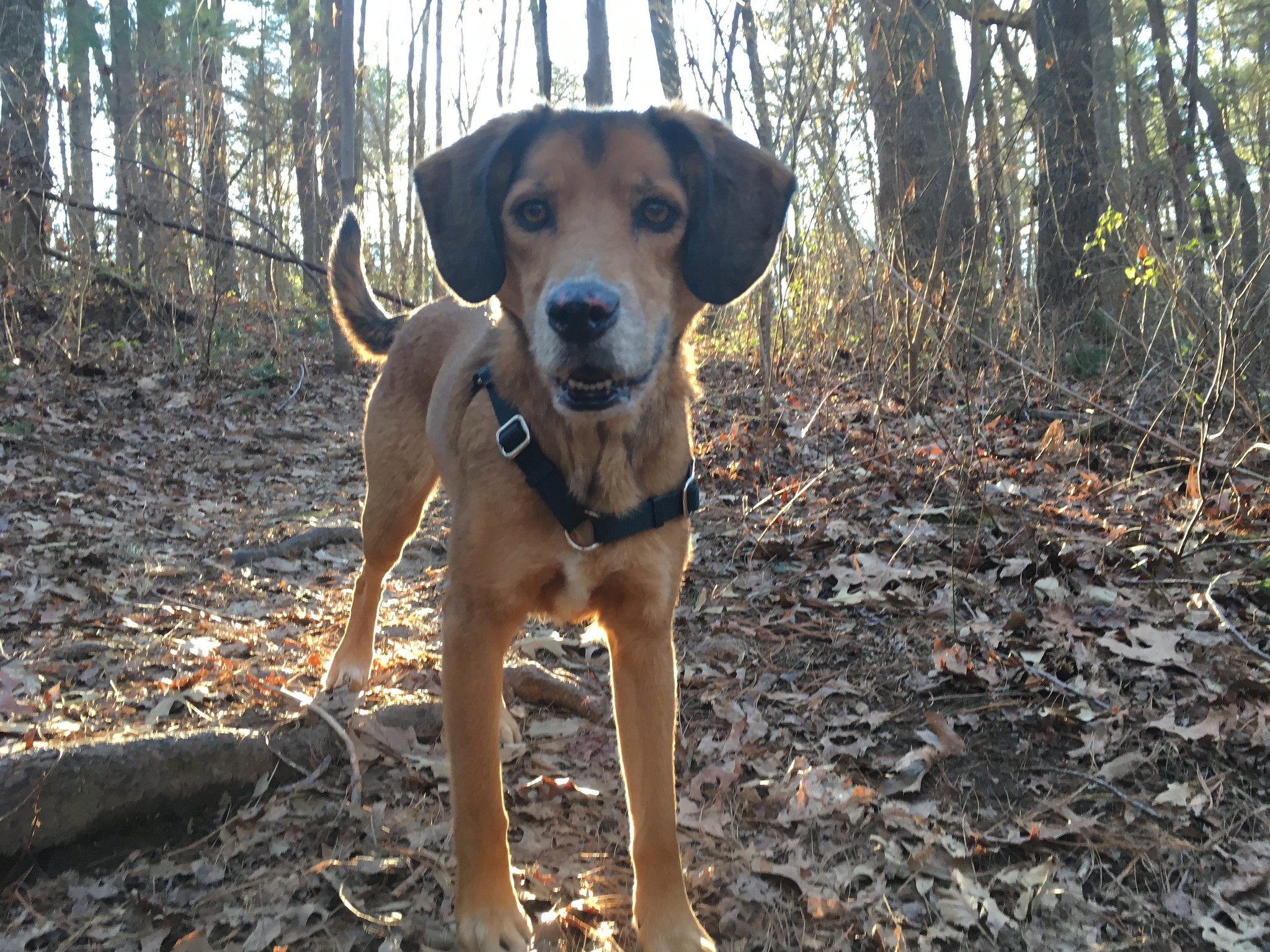
The next time I went to the woods, I saw a gentleman walking his dog. “Have you heard about the plans to develop these woods?” I asked. He said he had, and that he’ll miss being able to enjoy walks there. I mentioned organizing in resistance to the plan and he just sighed.
“They’re gonna do what they’re gonna do,” he said. “I grew up near here, and I remember when the woods were even bigger, wilder. As kids we spent hours and hours here, it was so special. But they’ve been chopping away at it for years, it’s all about money, it won’t be stopped.”
While my relationship with the woods does not go back to childhood, it does go back decades. I’ve spent countless hours there as well, grounding my system, marveling at the trees, listening to Great Horned owls. It feeds my soul.
I also remember when its footprint was bigger, before UNCA cut down sections for the Chancellor’s residence and student parking. While those losses were truly painful, there was advance communication to prepare for the blow. Some of the ire directed at UNCA about the current situation is due to a lack of transparency. They defiled the woods without notice, making plans without campus or community input.
45 acres of woods remain. The campaign to Save the UNCA Woods calls for a commitment to stewarding this vital natural and community resource, which is all the more vital in a post-Helene context, with the immense loss of trees and current wildfires.
This battle harkens to an earlier moment, in March 1995 (30 years ago), when a group called The Broadway Improvement Project was able to legally halt plans to expand Broadway Street. They wanted to protect the woods and the integrity of nearby neighborhoods, which at the time had a high percentage of Black residents. Montford, for example, was over 60% Black at that time.
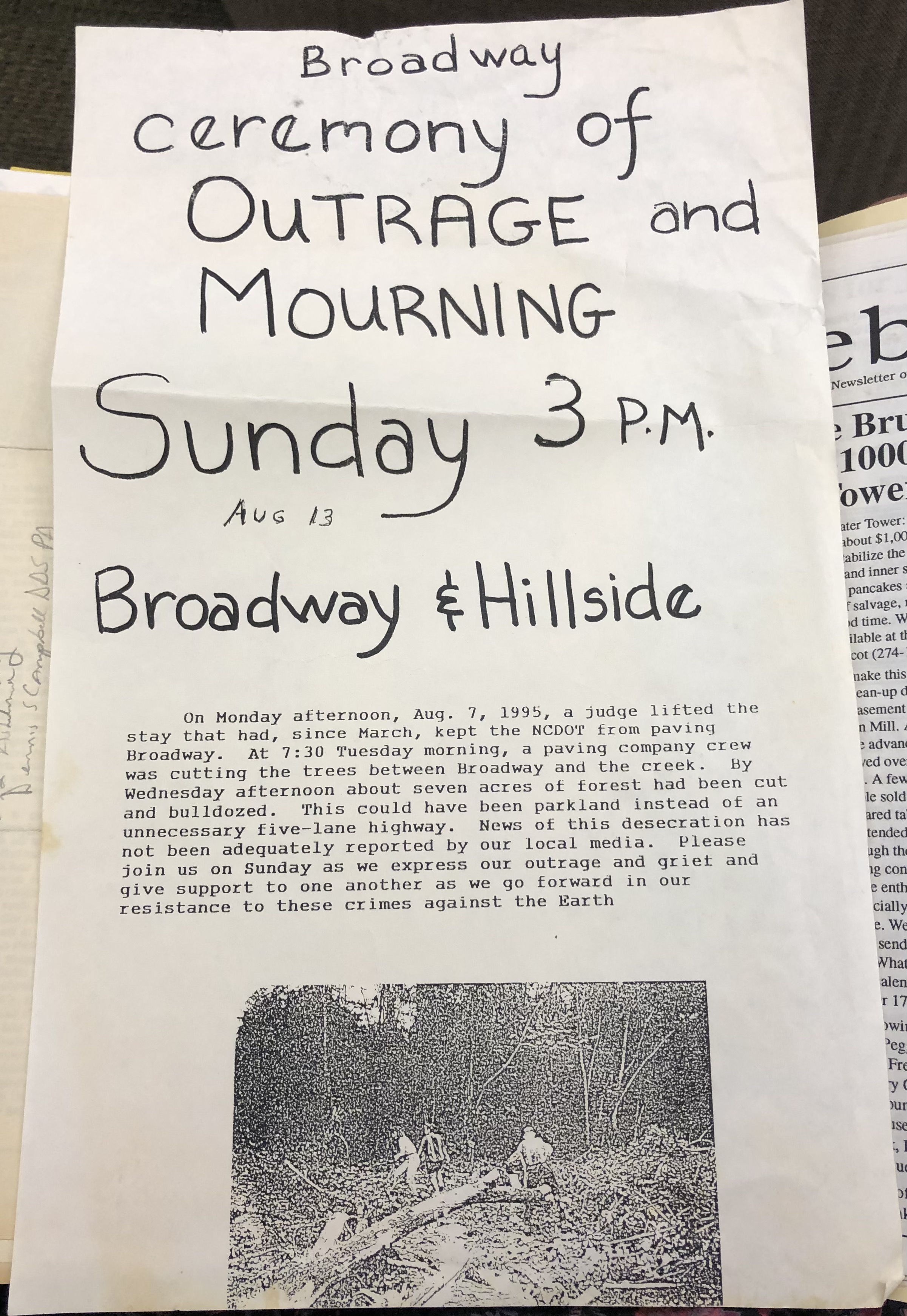
Alas, by August of that same year, their case was overturned, with UNCA being one of the main proponents for widening of Broadway. The NCDOT had set the plan in motion years before, a plan the powers that be refused to alter or stop. The weekend after the ruling, defeated organizers grieved publicly. Buncombe County Special Collections has this flyer for a “Ceremony of Outrage and Mourning,” in its archives:
Reflecting on the conversation with the man I met in the woods, and knowing what I do about history, I understand his defeatist attitude, especially because he is a Black person in Asheville. The Black community here has experienced enormous losses in innumerable unjust ways. And the losses continue.
In our city, development has long come before protecting legacy neighbors (and trees). Equity and the environment do not drive decision making, dollars do. Reparations from responsible sectors are slow in coming, to say the least.
Most recently, on March 11, City Council approved zoning changes that may increase the number of housing units, but which will not protect our most vulnerable neighbors. I am thankful to Sheneika Smith, Kim Roney, and Antanette Mosley for their votes, which unfortunately were outnumbered.
“While increasing housing supply is often seen as a solution, it does not necessarily serve the needs of current residents. In some cases, adding more housing can have the unintended consequence of driving up property values and rents, ultimately displacing communities of color rather than providing them with stable, affordable housing,” Mosley wrote to Mountain Xpress.
“I support increasing housing supply, but it must be done in a way that does not displace or cause harm to our residents. I didn’t support this proposal because I don’t believe in trickle-down housing — building more doesn’t automatically mean our longtime residents will benefit.”
As we look for strategies to protect legacy neighbors, slow gentrification, and prevent displacement, I’ll continue to uplift the cooperative housing network supported by PODER Emma Community Ownership, and the work of the Asheville Buncombe Community Land Trust. Established since the storm, Swannanoa Communities Together has been working hard to support housing stability in their Helene-ravaged community, which had a high concentration of affordable housing, where many service industry workers were living.
We can resource collective solutions which center our most vulnerable neighbors.
When I think about the movement to Save the UNCA Woods, I remember adrienne maree brown’s teachings about fractals in Emergent Strategy: Shaping Change, Changing Worlds. She wrote, “A fractal is a never-ending pattern. Fractals are infinitely complex patterns that are self-similar across different scales. They are created by repeating a simple process over and over in an ongoing feedback loop.”
“There is a structural echo that suggests two things: one, that there are shapes and patterns fundamental to our universe, and two, that what we practice at a small scale can reverberate to the largest scale.”
The UNCA woods is a fractal of forests everywhere. As I felt myself swayed by my neighbor’s reasonable pessimism, I had to stop and ask, What if we COULD save the woods? It would be a small but mighty victory in these days of despair, practice for what’s possible.
Last Saturday, protesters gathered on UNCA’s campus to speak up for immigrant rights and DEI as well as the woods. It’s all interconnected.
Life is well lived advocating for all that we love. If our efforts fail like those of the souls who fought for the woods in 1995, so be it, we will rage and mourn again. Though perhaps not as much as we would if we didn’t try.
And if we win, it will be an opportunity for much needed celebration.

Sign The Petition to Save The Woods (and be sure to check out saveuncawoods.org).


 Ami Worthen
We saved downtown
LikeLiked by 1 person
YES!
LikeLike
Ami, thanks for this blog post. I hope it is OK, but I decided to include the petition in the “Listing of Ways to Take Action and Be Informed” that is part of the Social Justice e-newsletter I edit. I appreciate what you are doing, and I thought maybe I could get a few more signatures to the petition.
Please take care.
LikeLiked by 1 person
Absolutely! Thank you.
LikeLike