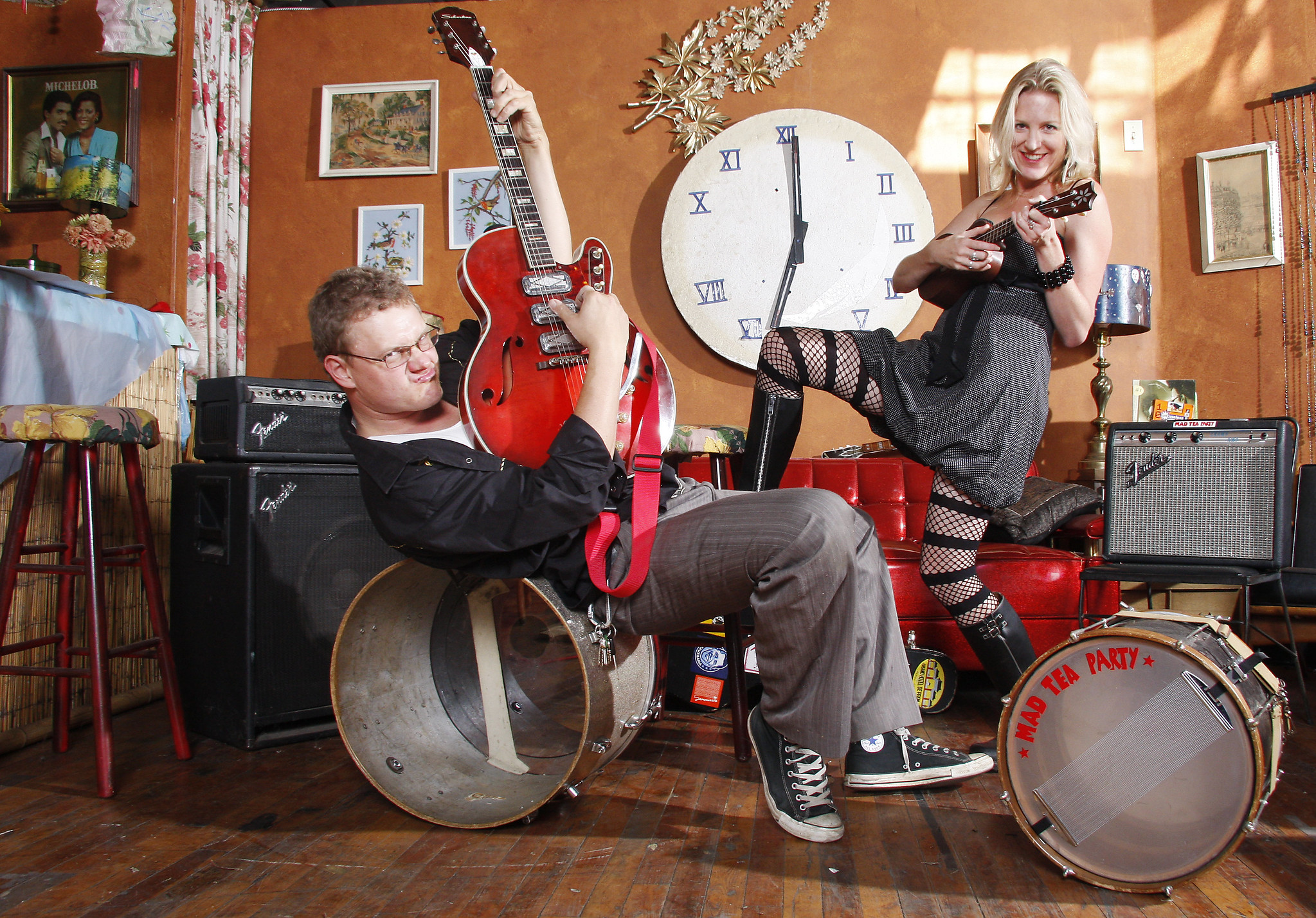
Brood XIV of cicadas are now among us, a miraculous 17-year occurrence, a kind of time capsule from 2008. That was the year Krekel and I released our album “Found A Reason” and were featured on the cover of Mountain Xpress. In August of that year ICE raided Mills Manufacturing and arrested 59 people. Protesters took to the streets in response. That was the year a global financial crisis began, and local tourism crashed as a result. Patterns.
Putting the cicadas in the context of a recent extreme hail storm which was followed days after by an earthquake feels ominous to say the least. We struggle to recover from Helene while terribleness is being inflicted in the U.S. and across the globe. And on and on.
In a recent essay author Ijeoma Oluo wrote, “Because even though so many stories of how our ancestors lived through times worse than this have been erased, that doesn’t mean that it didn’t happen.” She reminds us that, during those times, “We did not become only struggle, we did not become only fear and worry. If we had, we would not be here. We lived and loved, we laughed together and built together, and now we have the opportunity to honor that history by figuring out how to live today.”
Last Saturday I was part of a community celebration that was full of love, laughter, building together, and honoring history. It was the culmination of years of collaboration, and provided fuel and inspiration for future collective efforts.
A day of loving out loud.

The Citizen-Times article about the event by Sarah Honosky, “Asheville park in Emma community named for prominent Black builder James Vester Miller,” and the beautiful photos by Josh Bell (Citizen-Times) captured it well, here are some excerpts:
“ASHEVILLE – A real estate cooperative in West Asheville’s Emma community, formed to resist displacement and gentrification, officially named its new park for James Vester Miller, a prominent Black builder responsible for some of Asheville’s most iconic 19th- and early 20th-century brick buildings.
La Esparanza Real Estate Cooperative and representatives from the city’s legacy neighborhoods celebrated the park May 24, unveiling a community historical marker honoring Miller’s accomplishments.
The park began as an abandoned lot. It was bought and built by the community — one of La Esperanza’s three properties. During the celebration the property near the intersection of North Louisiana and Emma Road was teeming with life. Children scrambled over the playground. Paper plates were piled high with savory-smelling food, the air scented with grill-smoke and cooking meat.
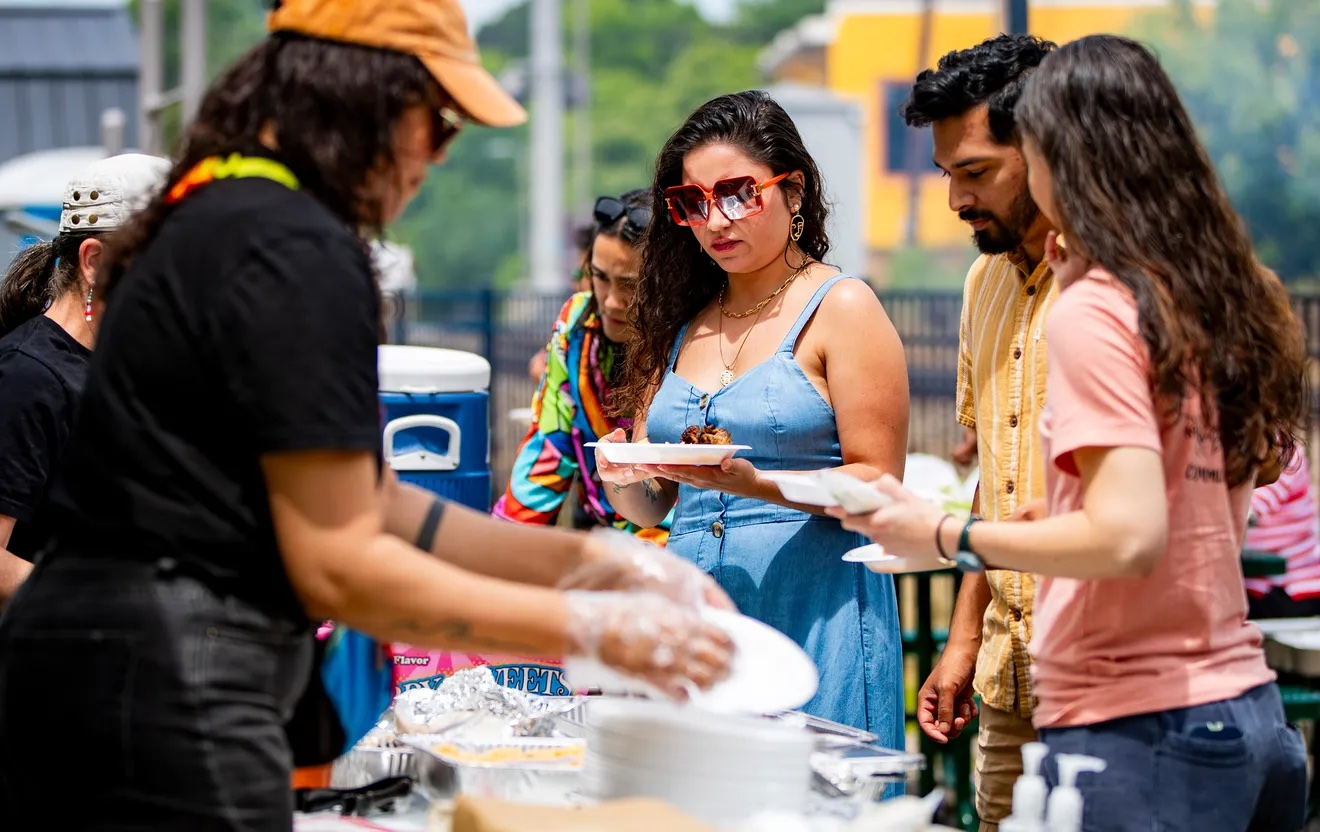
‘The reason why we’re here, why we do what we do, is we don’t want people to come and push us out of places that should belong to our community, and that’s why we are going to keep fighting,’ Patty Guerra, president of La Esperanza, said in Spanish to the assembled crowd, and Andrea Golden interpreted in English.
‘We’re going to keep fighting so our children, our grandchildren and our great-grandchildren can stay in this community because this is a safe place for us.’
In the front row of a covered pavilion, Margaret Fuller of Burton Street Community Association and Norma Baynes of Shiloh sat alongside Andrea Clark, granddaughter of Miller, who was integral to the park’s creation…
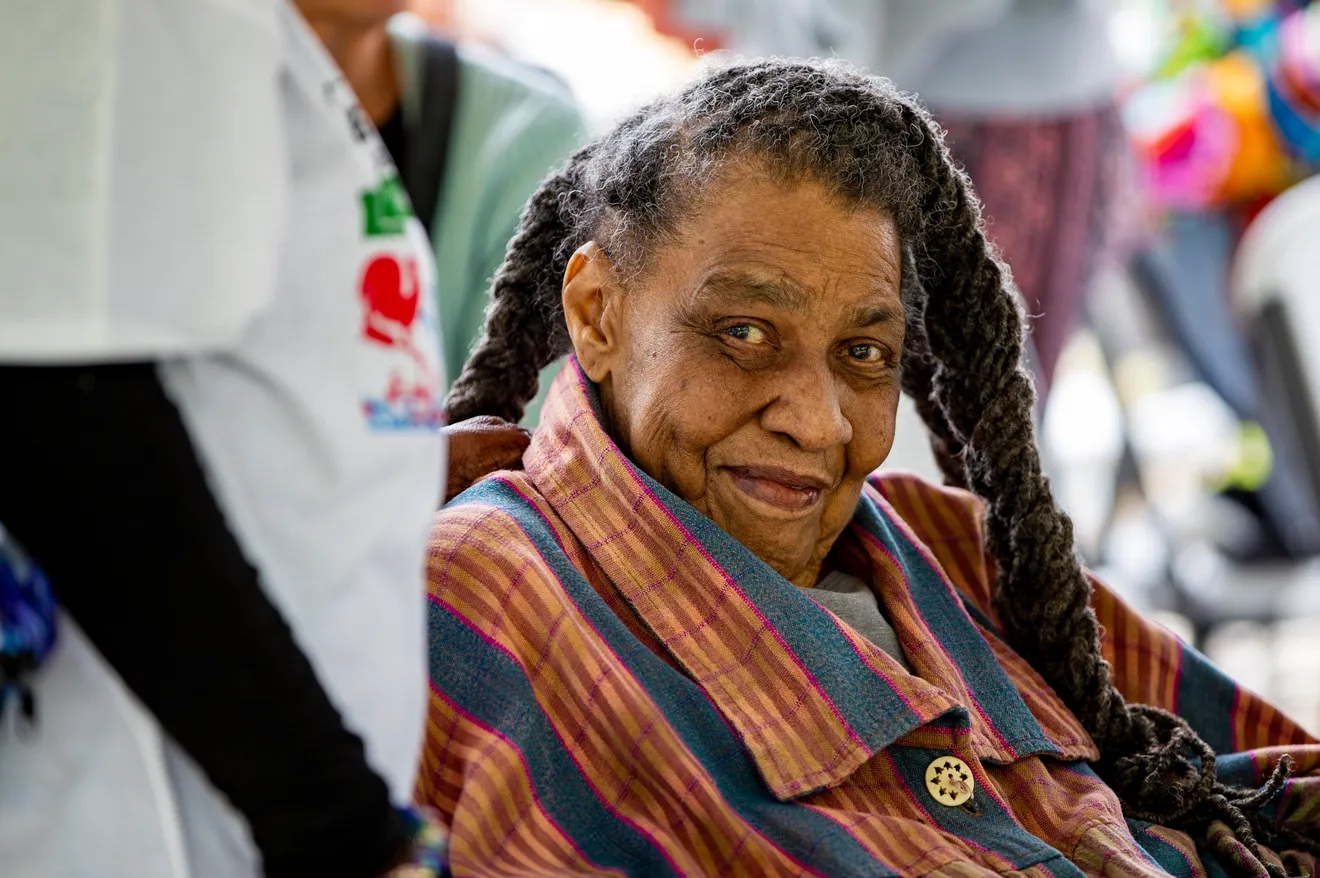
‘Andrea (Clark) has spent so much time in our community, driving around with us, walking around with us, making sure we understand the history of every street and every home,’ said Golden, co-director of PODER Emma, a neighborhood-based organization that works to help neighbors in mobile home parks go from tenants to owners.
She was emotional speaking about it. The crowd gave Clark a standing ovation…
James Vester Miller was born into slavery in Rutherford County in 1860. After emancipation, he moved with his mother and siblings to Asheville where he spent his days visiting construction sites, developing skills as a brick mason. According to the marker, he became a leading builder, first working as a contractor and later establishing his own company, eventually named Miller and Sons.
In many ways, Miller’s work connects the city’s legacy neighborhoods, Baynes said. She described the work of the Legacy Neighborhoods Coalition, intended to help support one another, preserve community history and help ‘our legacy to live on.’
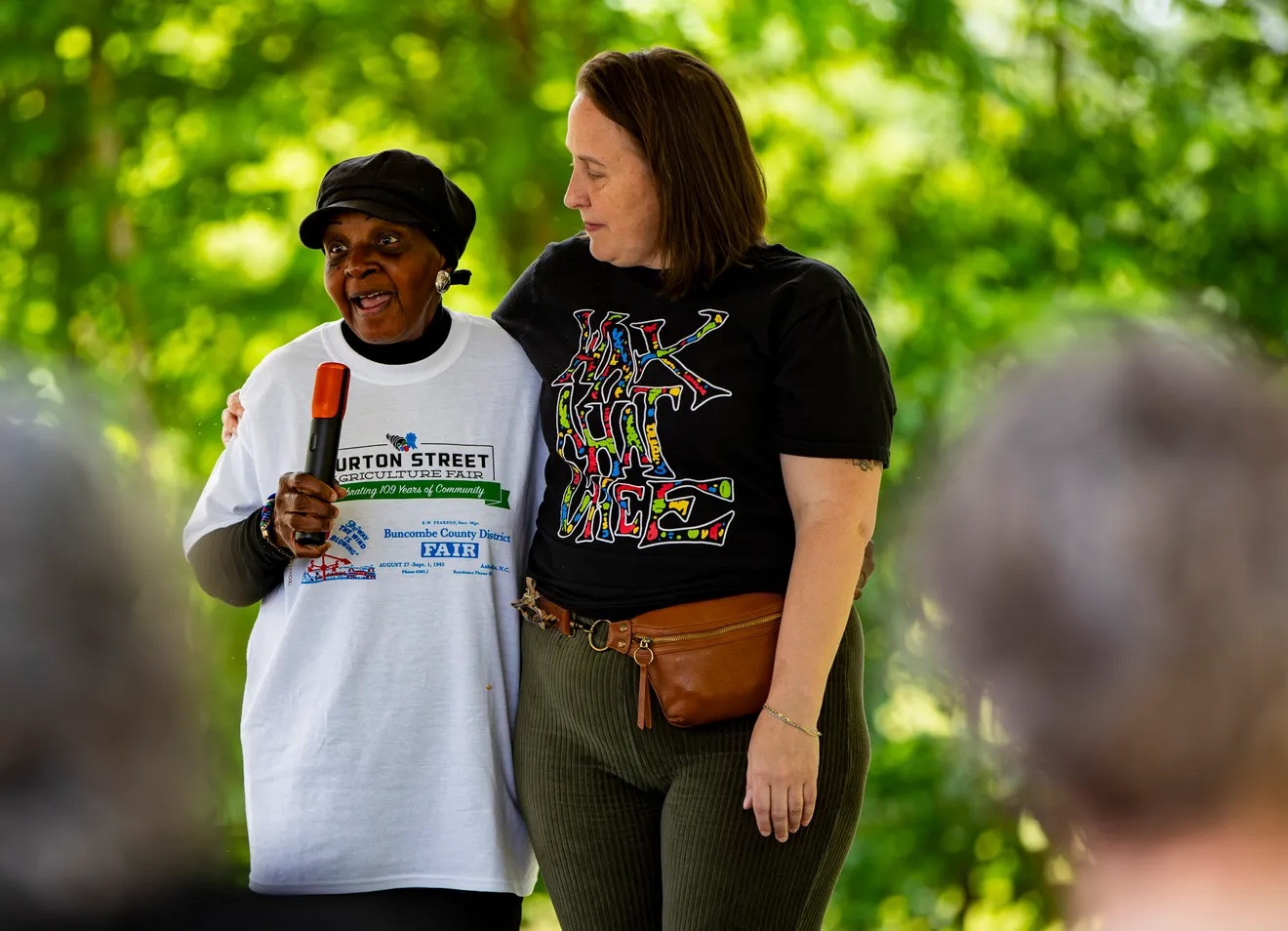
‘We are celebrating people, we are celebrating culture. There are no borders on that,’ Fuller said.
The coalition consists of neighborhoods that have historically faced racially discriminatory practices and/or also face current displacement, according to a May 1 news release from La Esperanza.
Asheville-Buncombe Community Land Trust, Burton Street Community Association, East End/Valley Street Neighborhood Association, PODER Emma Community Ownership, Shiloh Community Association and Southside Rising are working together ensure community-led development in their neighborhoods, prevent harmful development and find solutions that support legacy residents remaining in their homes, the release said.
‘What we’ve been able to do by coming together and being united is to let the city and the county know that these legacy neighborhoods are a vital part of the Asheville community and they need to be respected and protected,’ Sekou Coleman, an organizer in Southside, told the crowd.”
It was profoundly moving to celebrate both the incredible success of creating a community-owned park, and the power of the solidarity practiced by the Legacy Neighborhoods Coalition.
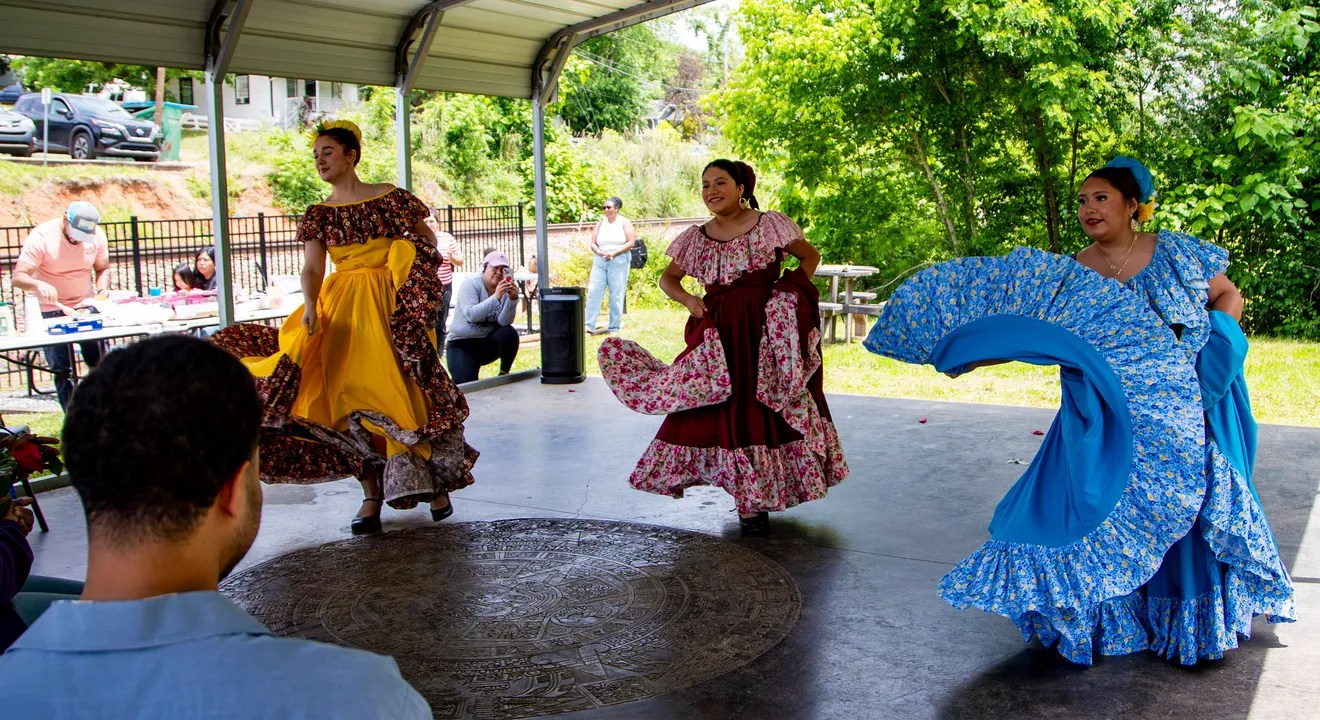

It was also moving to experience the joyful performances of Ballet Folklórico Raíces, and the John R. Hayes High Steppin’ Majorettes and Drum Corps, which is part of UMOJA Health Wellness and Justice Collective (who has offices just up the street from the park). They both WOW-ed us all. These groups connect young people with significant cultural roots, and provide opportunities for pride-inducing performances. There is a fun fundraiser for the High Steppers coming up this Saturday, May 31, and you can attend or donate.
The celebration was perhaps more poignant due to the fact that recent organizing to try and protect naturally occurring affordable housing in Emma was thwarted by the Buncombe County Board of Adjustment. The Emma Neighborhood Council tried to stop a development that will accelerate gentrification in their neighborhood, where nearly half of the residents identify as Hispanic, and where 71% live in a mobile home. Jason Sandford (Ashvegas) covered this sad story in a recent article, “A tipping point for the Emma community? New 107-unit townhouse development could push housing affordability out of reach, residents say.”
That defeat reinforces the importance of every success, including James Vester Miller Park and PODER Emma’s plans to build a 38-unit mobile home park adjacent to Erwin Middle School. You can make a donation to support their impressive efforts.
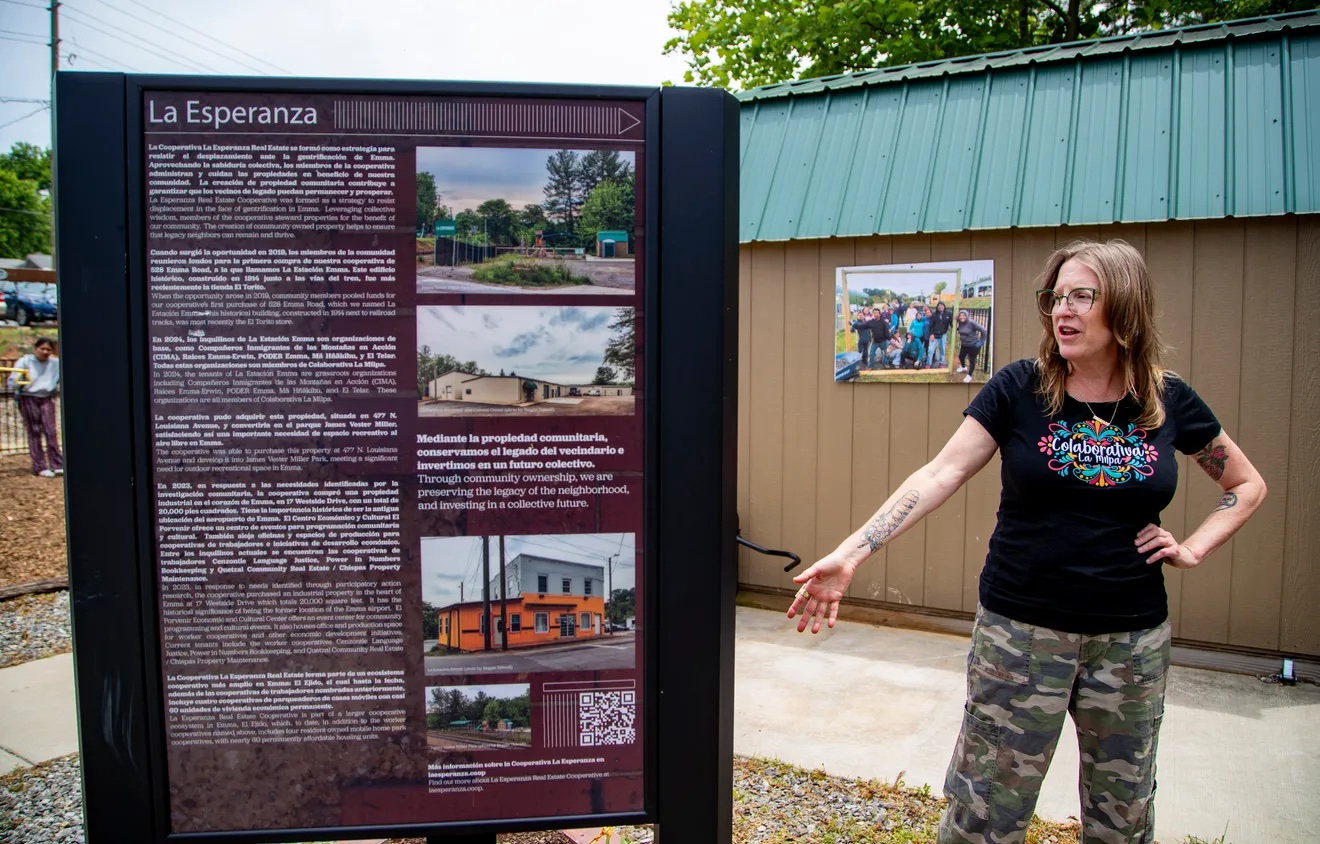
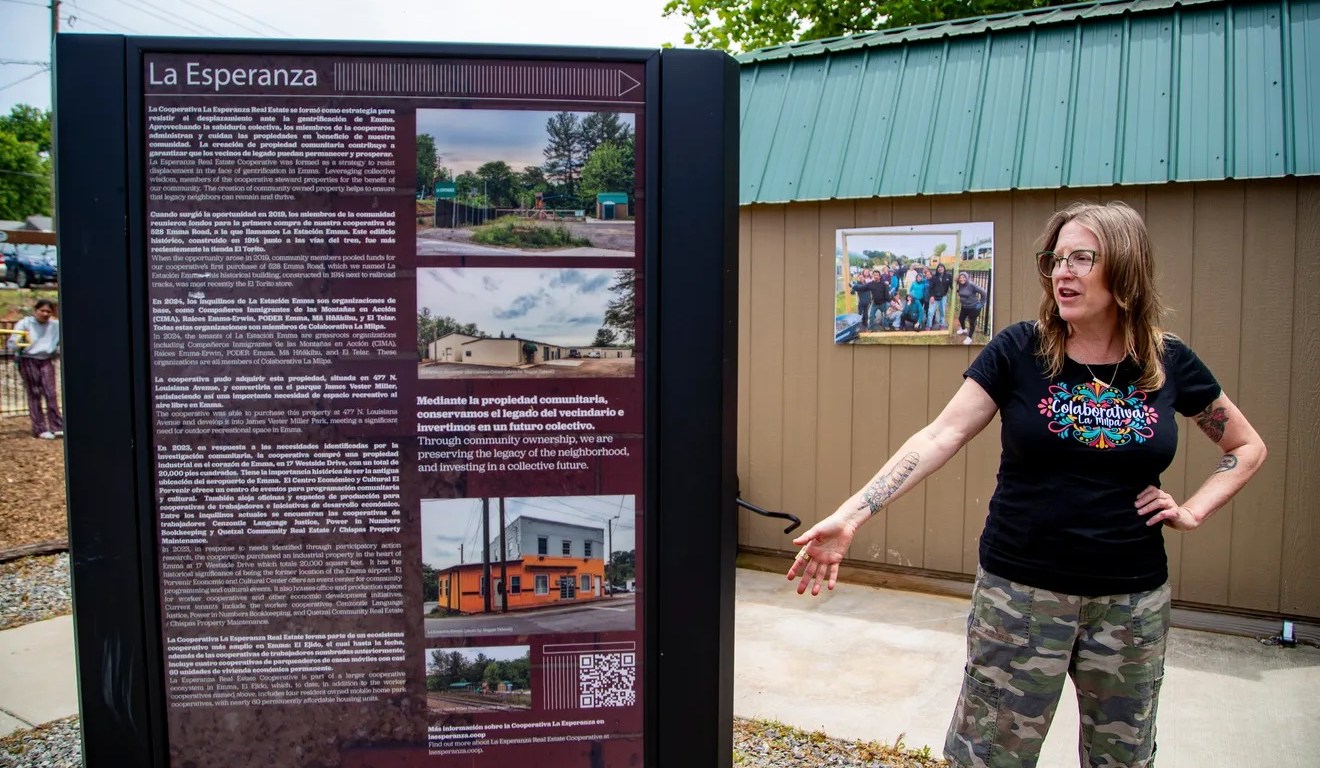
The cicadas are encouraging me to come out of my shell. In the community projects I am involved in, I tend to stay behind the scenes. Yet if I believe everyone’s contributions are important, that means mine are too. So I’m including this photo of me talking about the new historical marker. I am proud of my work coordinating the content of the marker – writing, editing, compiling photos and working with writers Jasmin Pittman and Janet Hurley, designer/photographer Reggie Tidwell, and Miller family advisors Andrea Clark and Ali Rivera.
May we continue to share and preserve stories and community spaces. May we keep loving out loud.
More 2008 Throwbacks
The archivist in me can’t help but share these.
Here’s a music video Krekel and I put out that year:
Amazingly, these are from the 2008 cicade brood XIV emergence in Asheville, preserved in resin by my friend, artist lydia see. They’ve been hanging in our kitchen all of these years!

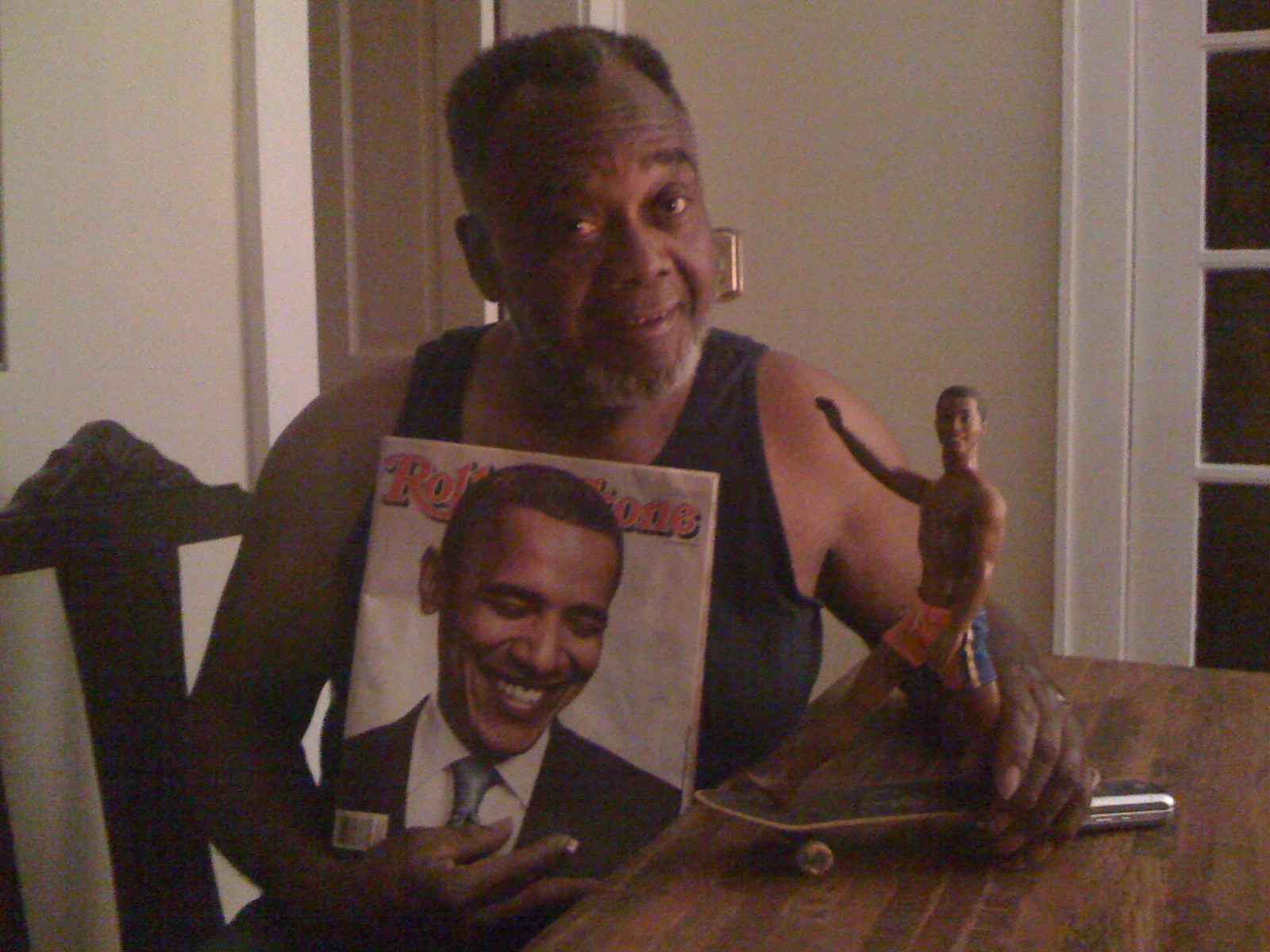
Odell Irby rooting for the election of President Barak Obama:
The Xpress cover mentioned above:



 Ami Worthen
Beautiful and informing. Loved this issue.
LikeLiked by 1 person
Thank you!
LikeLike
beautiful
LikeLiked by 1 person