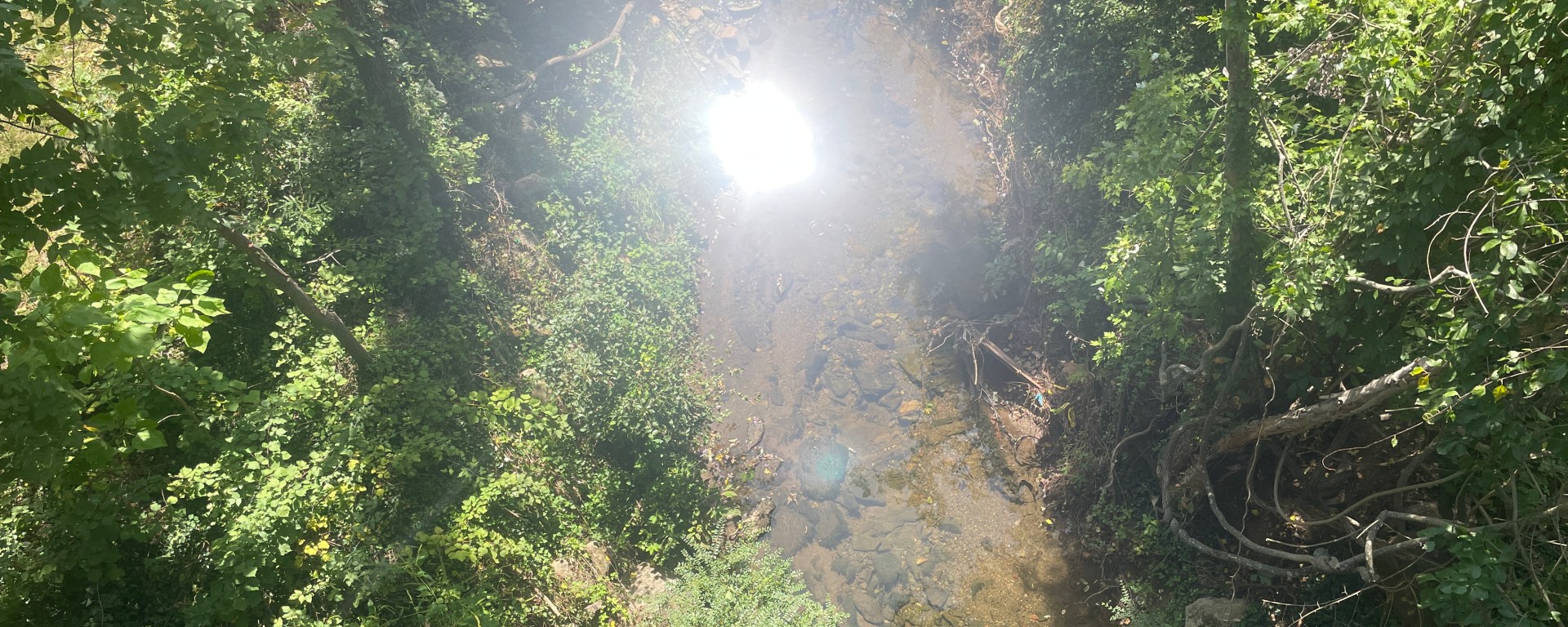
A poem, prose, and historical timeline offered in reverence for Reed Creek.
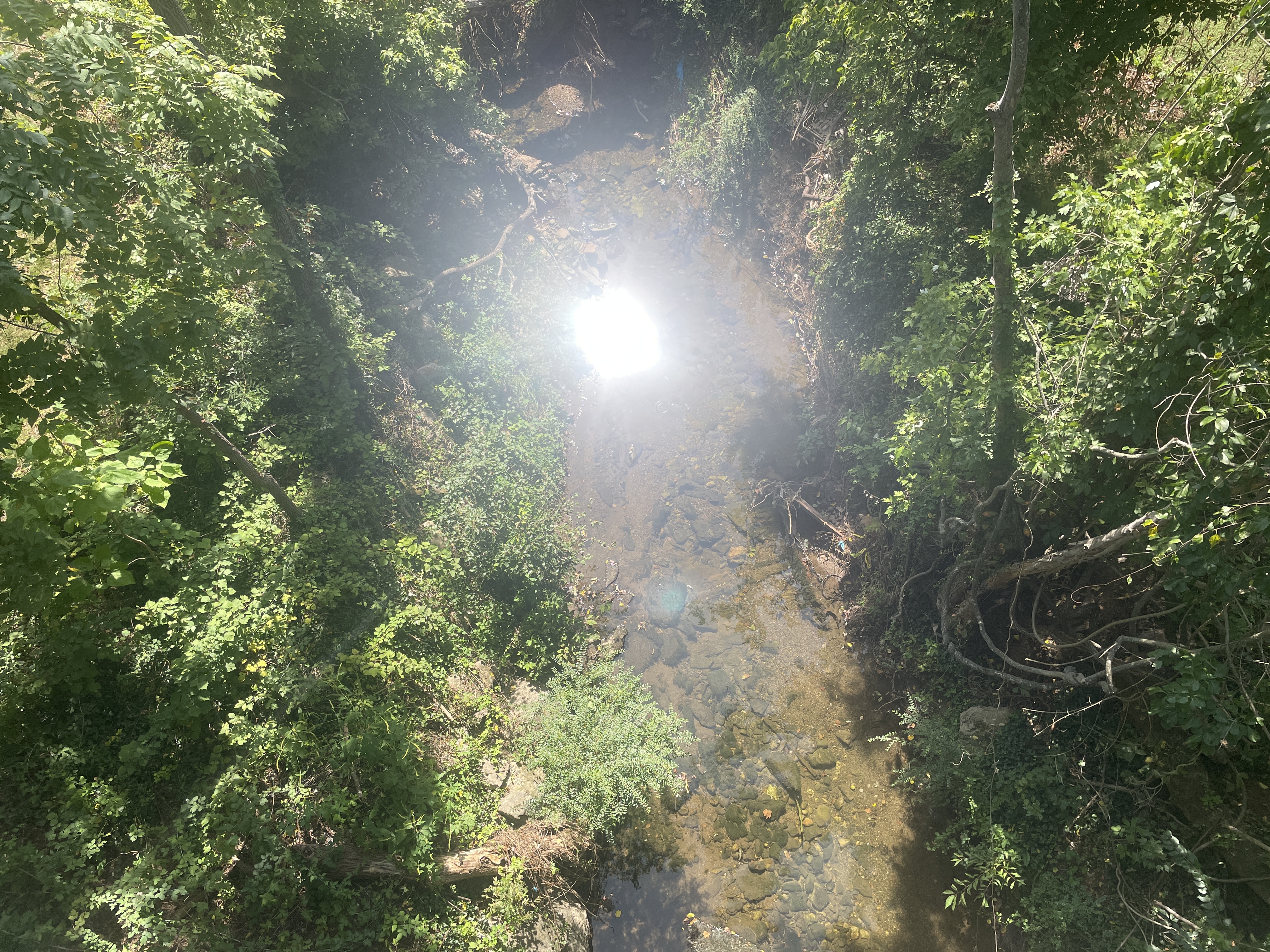
flow
a bold
steady prayer
Reed Creek
i revere
constant
changing
sacred
wild
i pay
homage
to flow
buoyed by beauty
each day
in awe of
the wonder
– watershed
A relationship with Reed Creek
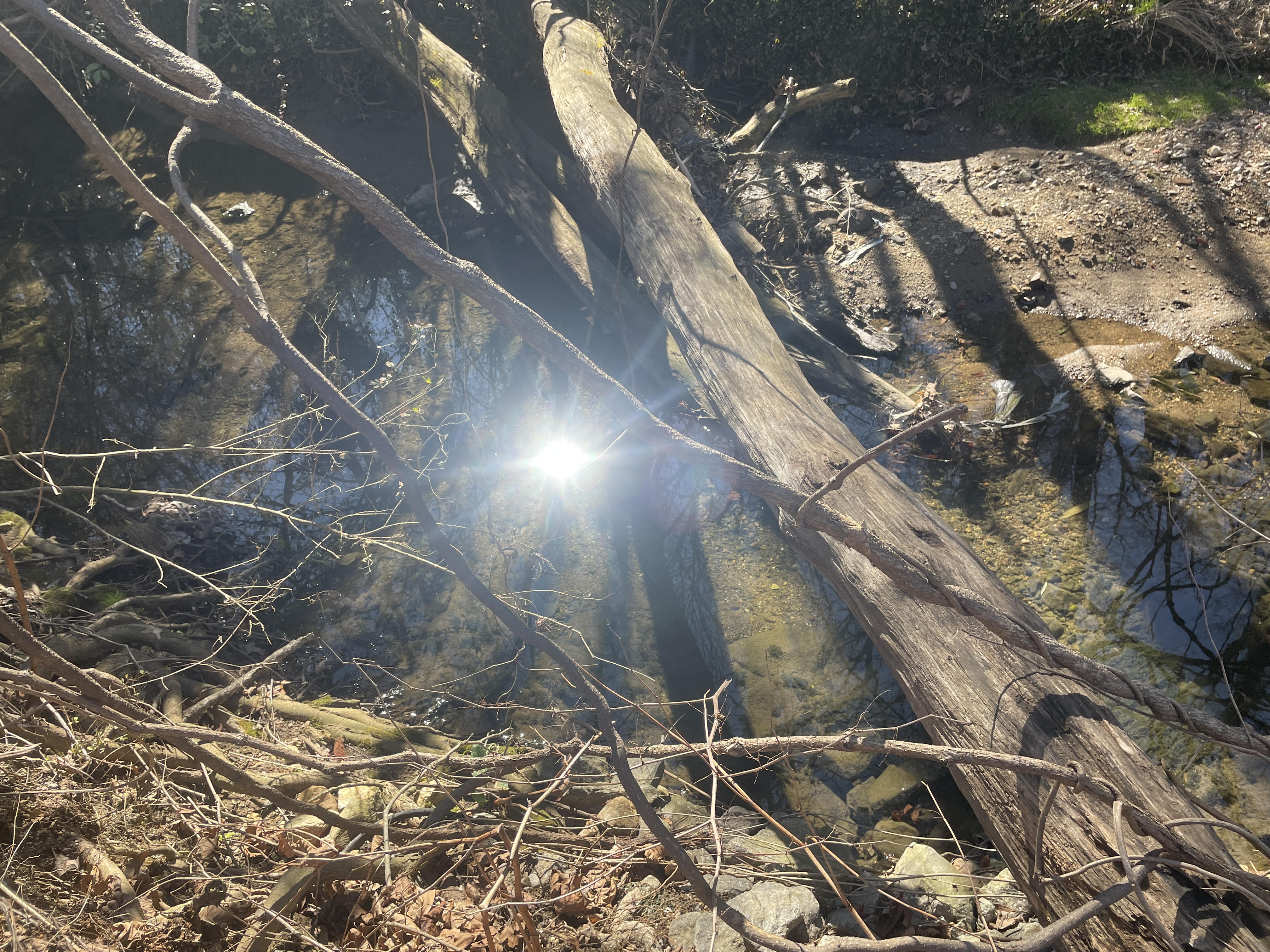
Reed Creek has flowed through my life for decades. It is sacred. Holy. Home. The watershed that holds my heart has become part of my soul’s DNA.
Along with the years of joyful times by the creek has been the pain of witnessing development and disregard that challenge its health. I often dream about centuries ago when it was unpolluted and free. I am comforted knowing the water remembers.
Yet even with its source springs buried below roads and buildings downtown, Reed Creek’s travels to the French Broad River have been ceaseless. Perhaps I love this creek with such intensity because, even contaminated and corralled, its spirit stays untouched.
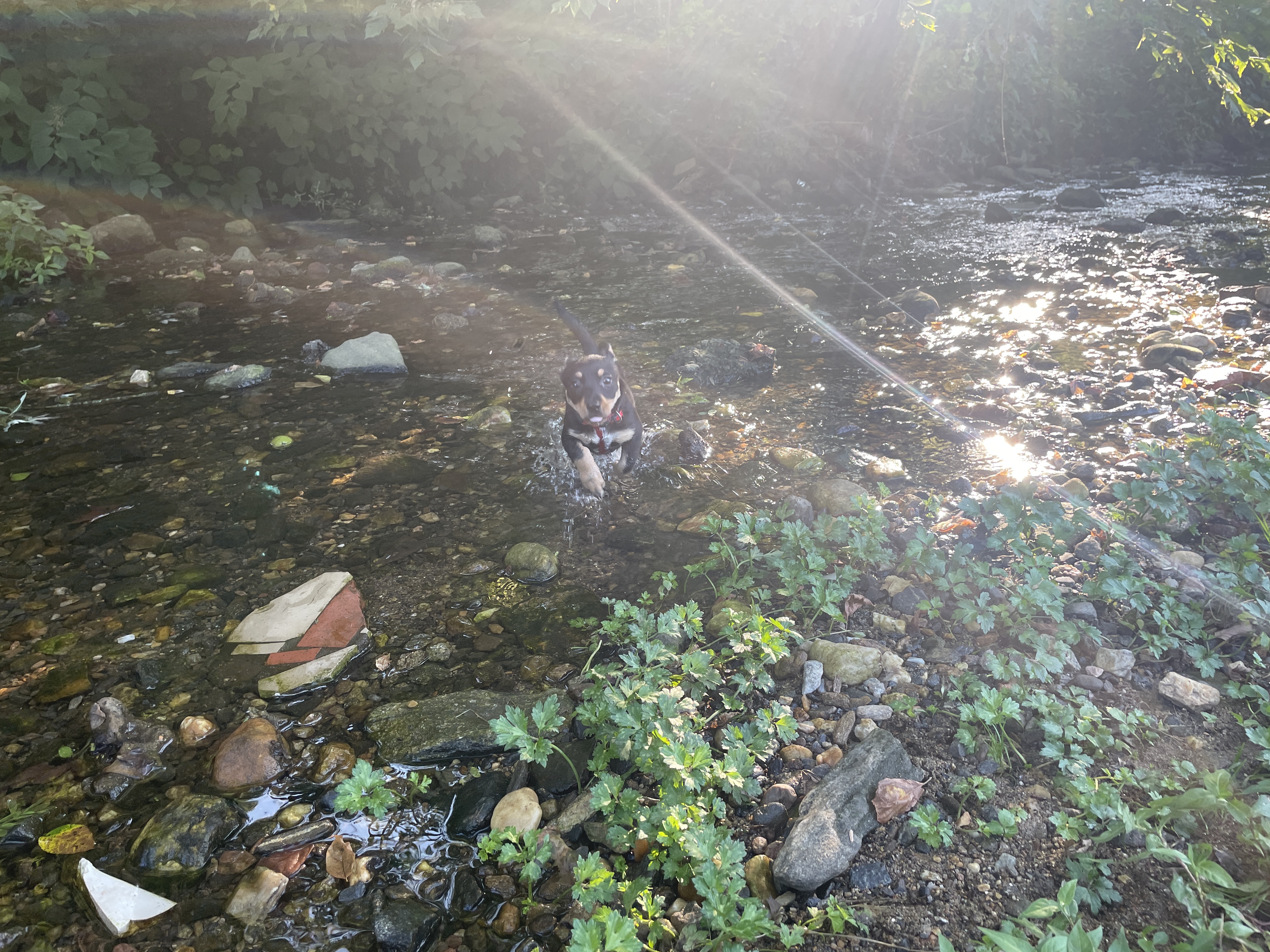
As I reflect our long-time co-existence, I celebrate my family’s relationship with this waterway. Jason and I have spent more time with Reed Creek than we have with some of our friends and family. Each of our dogs has delighted in playing there. On a daily basis, we witness the subtle and not so subtle changes of its level and clarity. Tuning in. Reverential attention.
We observe the activity in and along the creek, which provides a home for birds (including a Great Blue Heron), fish, bugs (including lightning bugs), reptiles (snakes and such), amphibians (salamanders), and mammals (squirrels, groundhogs, foxes, bats, coyotes, rabbits, unhoused humans, and more). We breathe in the trees and plants through the seasons, every bit of green a gift.
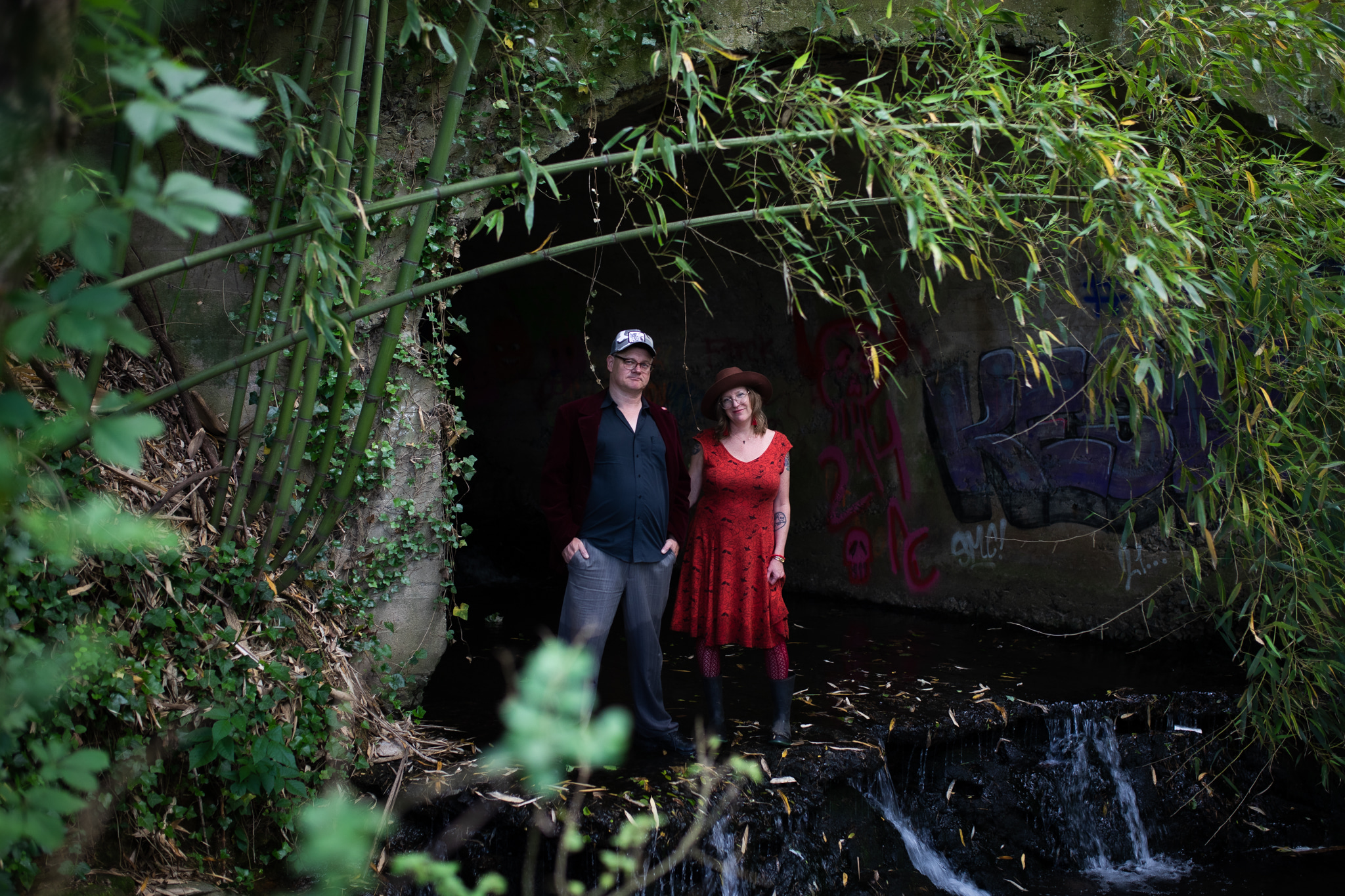
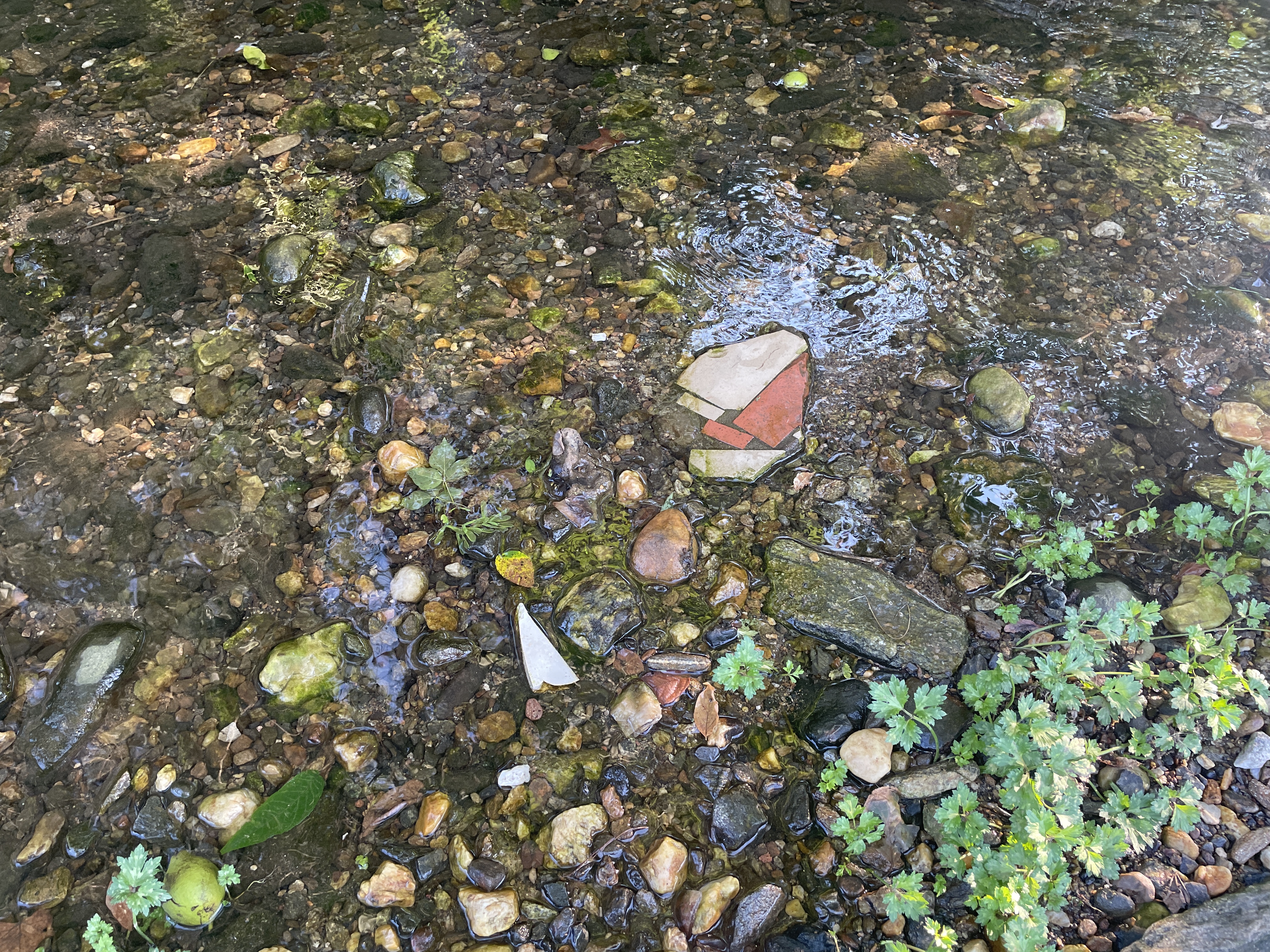
While I adore Reed Creek’s natural beauty, I also find beauty in the human detritus like the bricks from old houses, crumbling city infrastructure, rusty pipes, bridges, and slabs of concrete. A gritty urban creek with plenty of trash that also often has clear water teaming with minnows.
Much has changed since I first met this body of water. There are more changes to come. I find comfort knowing that Reed Creek will still be flowing after we’re gone.
Happenings along the creek
Of course I’m fascinated by the history that has happened near Reed Creek, and I rarely walk along its banks without musing about the layers of stories held by this place. Below are some of the moments I muse about, with many missing. An intersecting historical timeline you can read later is the one I created for the Black Stories in Census Tract 2 exhibit, linked here.
TIMELINE
Eons ago – Geologic stuff happened, and springs burst from the ground forming Reed Creek. I am not versed in the mechanics of this origin story.
8000 or so B.C. – The Catawba Trail, an early Cherokee trading path, ran along Reed Creek.
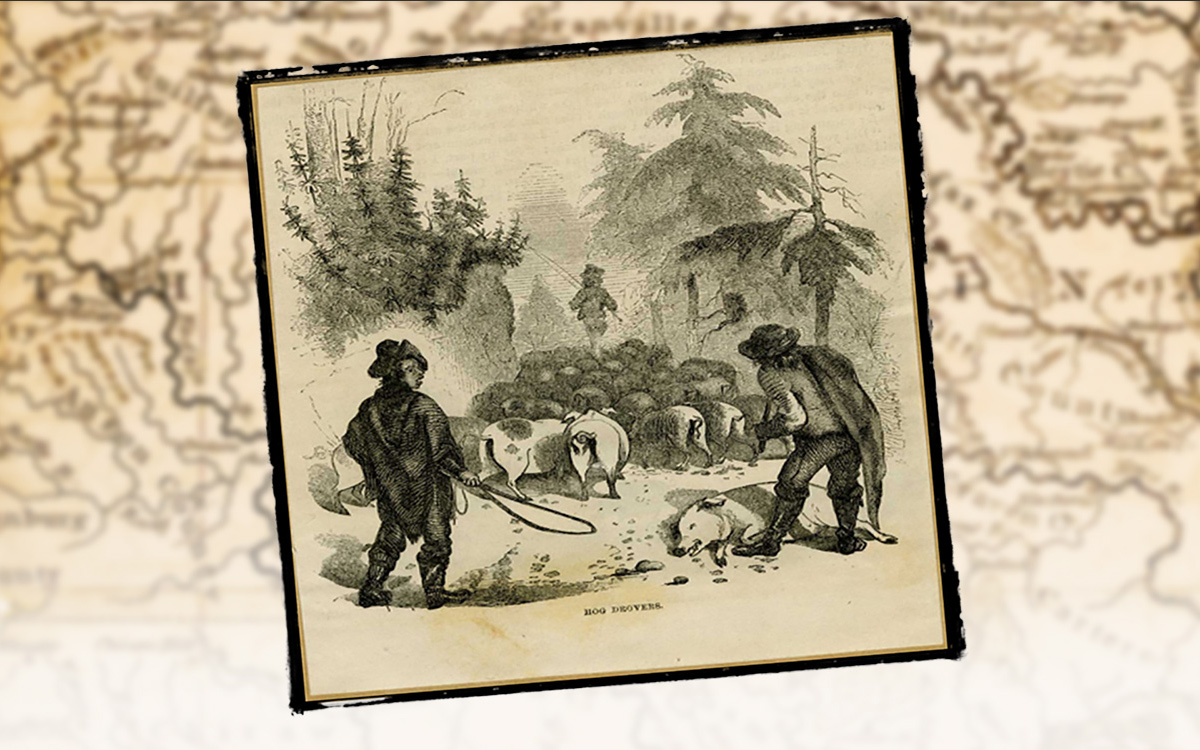
1700s – European colonizers took over the Catawba Trail, turning it into a stock road which was used by drovers.
1794 – The road along Reed Creek was called N. Main Street, and was primary (only?) road in what was then called Morristown, current day Asheville.
1824 – The North Carolina legislature formed the Buncombe Turnpike Company to “improve” the stock road for stagecoach and wagon traffic, construction began soon after.
While there has been no specific research on this that I’ve found, historians I’ve asked agree that most likely enslaved labor was used to build the Buncombe Turnpike.
1827 – Buncombe Turnpike completed, with a section running from the French Broad River along Reed Creek to Asheville’s public square.
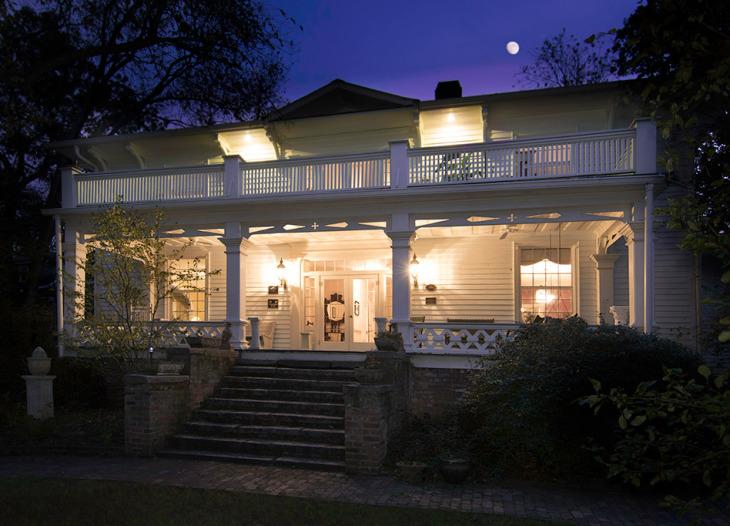
1843 – The Rankin house, one of the oldest houses in this area, was built. It included a separate cook house which was also quarters for one of the people they enslaved, a cook named “Aunt Betsy.”
Elizabeth L. Rankin’s obituary includes a description of when she and her husband William moved here in the 1830s which features Reed Creek.
It reads, “Asheville at that time was a mere village – a stopping place on the Buncombe turnpike. It was before the days of the railroad and when many of the present paved streets of the city were covered with virgin timber. The route of Mrs. Rankin to Asheville was up what is now North Main Street and while passing along this ‘road’ she observed a timbered elevation on the west through which flowed a clear stream of water. Mrs. Rankin declared that she wished this place for a home.”
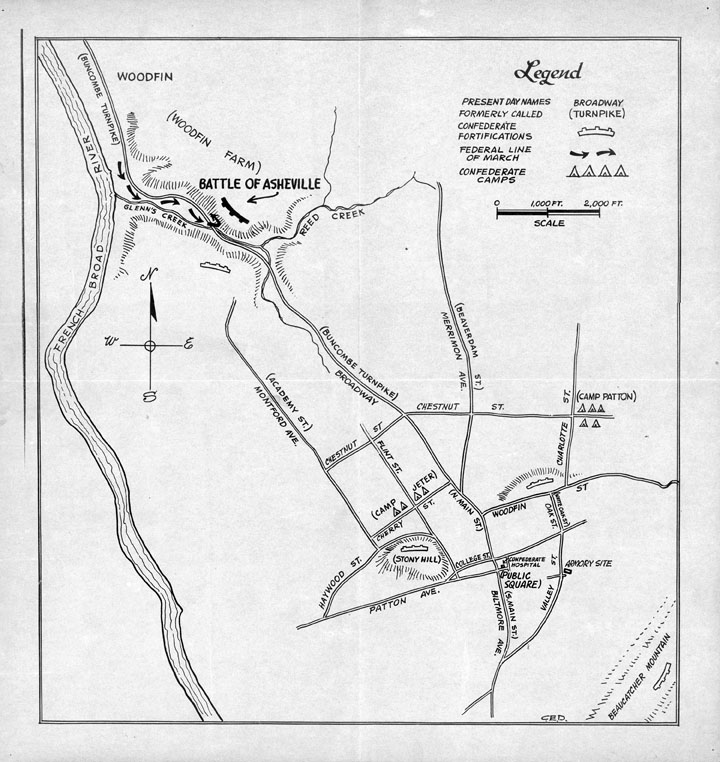
1865 (April 6) – The Battle of Asheville occurs along Reed Creek (which at the time was called Glenn Creek, the current name of the creek along W.T. Weaver Boulevard, as shown in this map). Col. Isaac Kirby’s Union troops fought those of Confederate Col. George Wesley Clayton. After five hours or so, Kirby retreated, fearing rain and Confederate reinforcements.
Weeks later, April 23 – 26, General Geroge Stoneman’s Union army came through Asheville, possibly entering town along Reed Creek, and liberated people enslaved here. Aka Asheville’s Juneteenth. We commemorated this important moment once, I would love it if it was acknowledged every year.
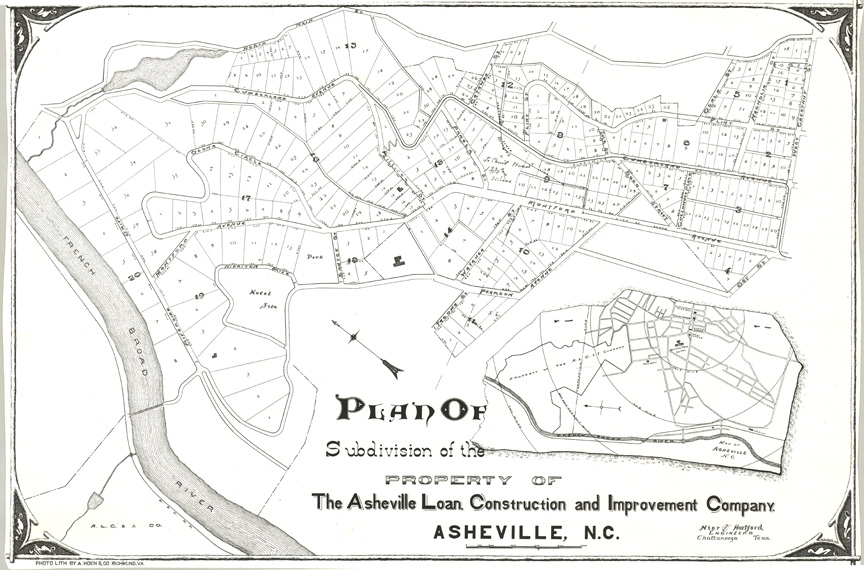
1889 – Asheville Loan, Construction, and Improvement Company, founded to develop what will become Montford, with an eastern boundary of N. Main St.
1910 – Grocer John H. Jenkins Jr. began building 241 Broadway, which opens in 1920.
1914 – N. Main Street renamed Broadway.
1916 – Broadway Market building built, history here.
1910 – Rankin homestead sold to be developed.
1923 – S. B. Penick & Company, a crude drug company which utilized wild harvested plants from the area, moved their AVL facility to Broadway at Catawba on Reed Creek.
1966 – Penick closes and deeds its lot to the City of Asheville, for $10 and a promise to turn it into a public park.
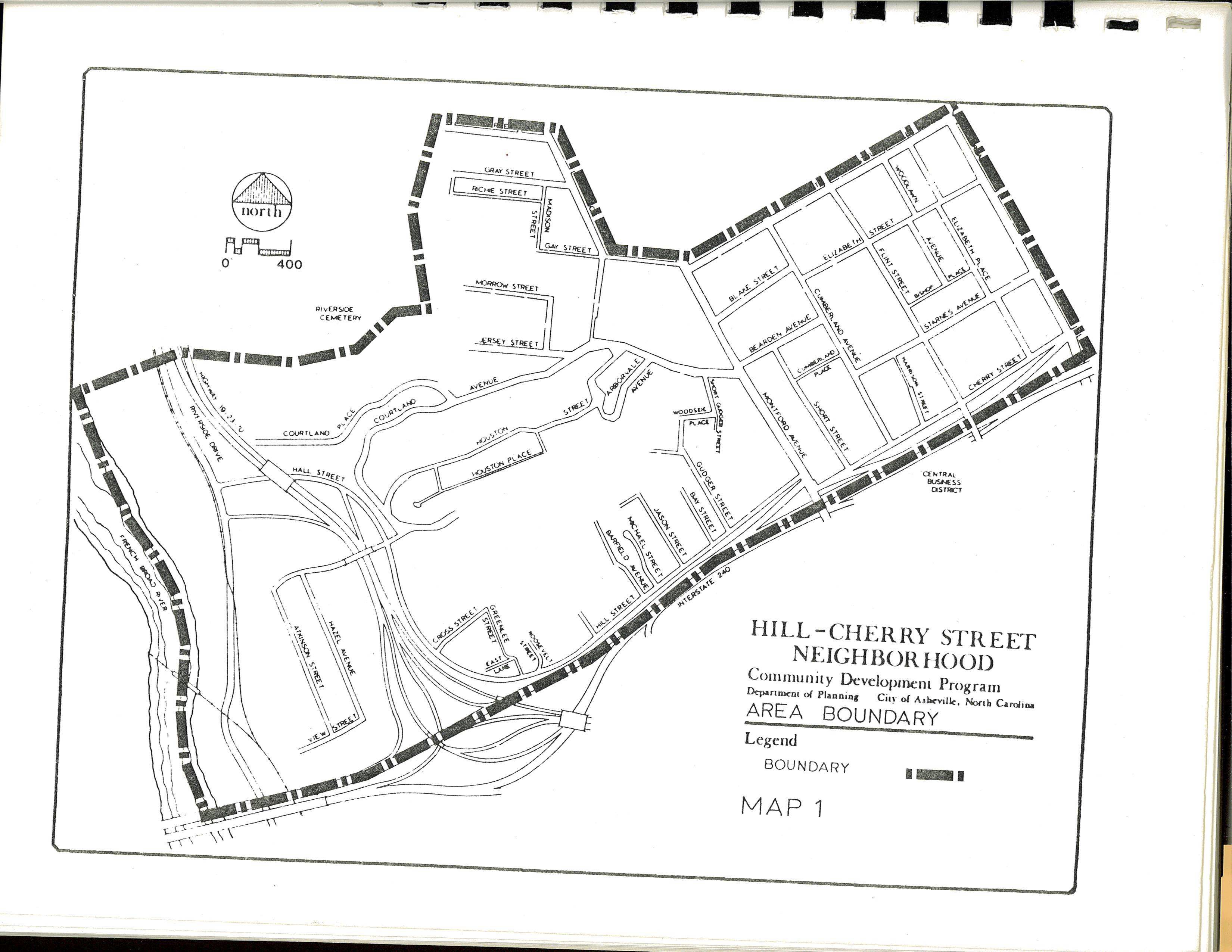
1988-1993 – The Head of Montford Project urban renewal project has Broadway/Reed Creek as its eastern boundary.
1993 – Fred Eggerton buys the Rankin House and begins fixing it up, along with many other houses in Montford.
1995 – Broadway widened, despite organized resistance. Part of the UNCA woods were lost (though the project had university support), as well as a number of houses, parts of which fill Reed Creek. Find backstory here.
Late 1990s – The Broadway Market Building was affectionately renamed the “Pink Haus,” and was a DIY space with numerous tenants and epic house concerts.
1998 – I moved into Montford and the Reed Creek watershed. For years bushwacking was required to visit the creek, which was much healthier in those days.
2000 – During this phase of N. Lexington Avenue’s scene, one of the new business owners climbed into the stormwater system to place a crystal at the source of the springs that run under Lexington Avenue and into Reed Creek.
2000 – The tenants of the Pink Haus were evicted and the building was left empty.
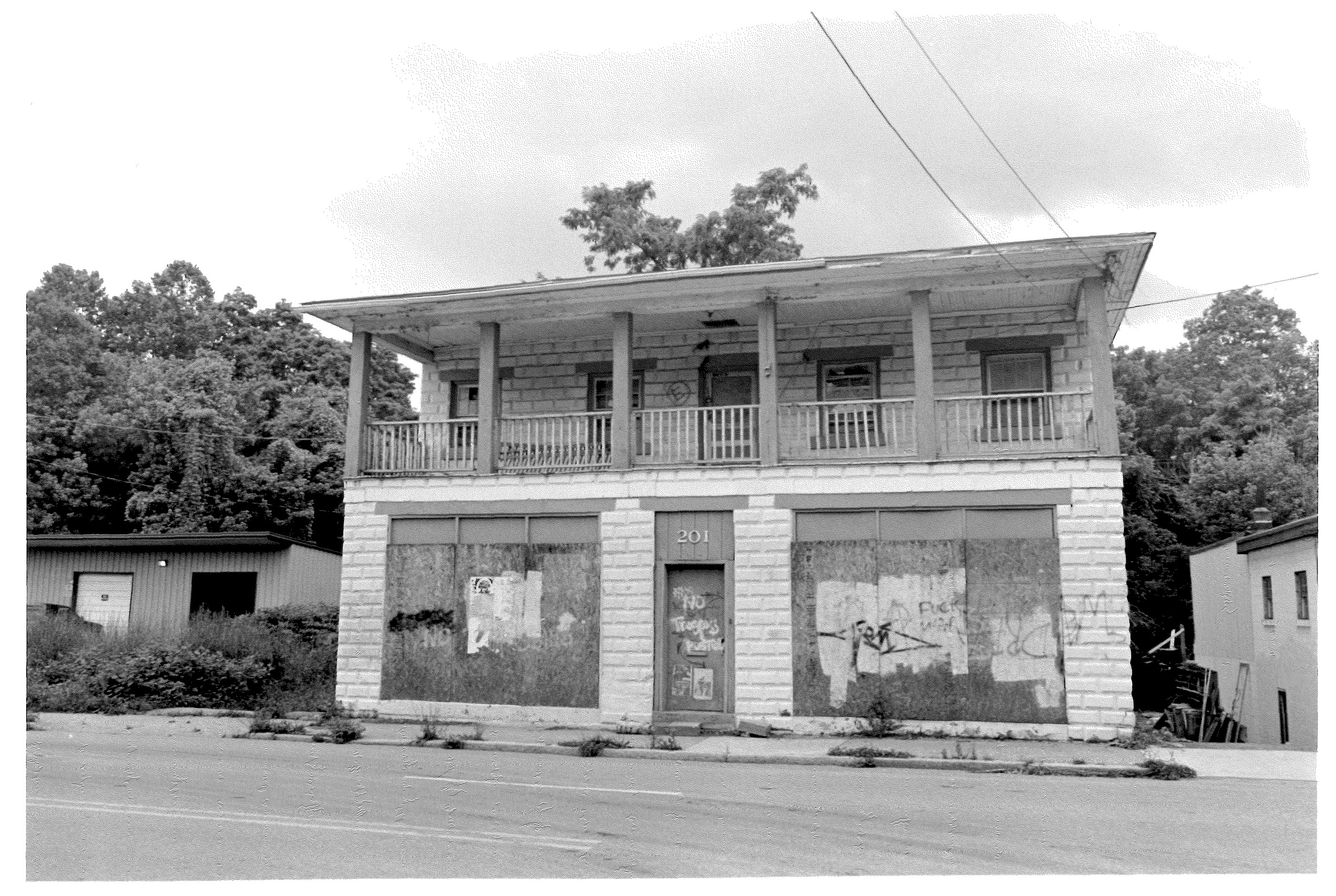
2003 – Broadway Market Building added to National Register of Historic Places.
2004 – City of Asheville begins acquiring land for the Reed Creek Greenway.
2006 – First section of the Reed Creek Greenway opens.
2014 – Rankin House Inn opens.
2017 – Little Jumbo Bar opens at 241 Broadway.
2019 – The Harrison luxury apartments on Broadway are built, replacing the Bob Lawrence repair shop.
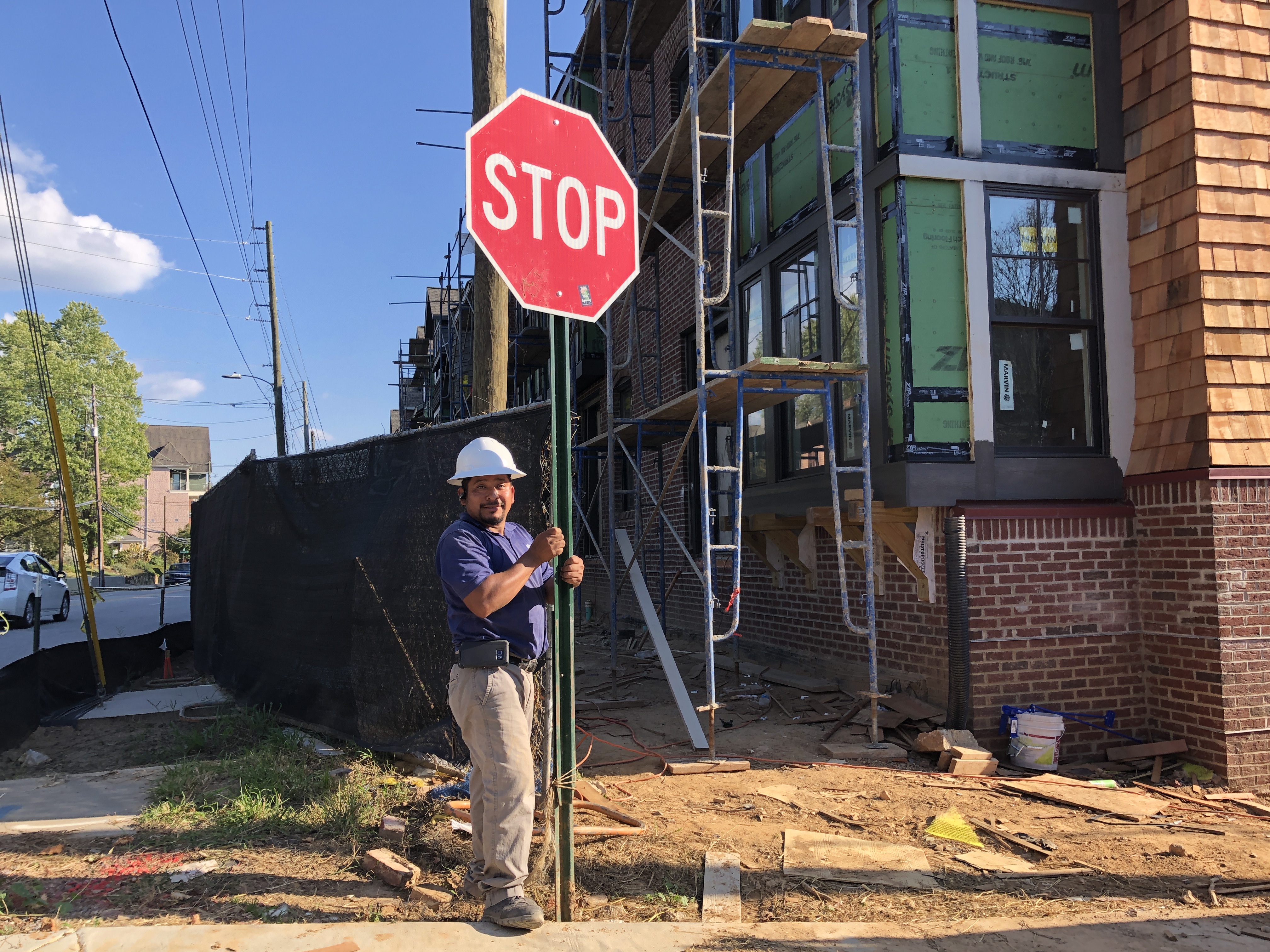
2020 – The Broadway luxury townhouses are built. The Broadway Market Building is demolished, despite its historic designation. Nice creek remediation is done behind the property, but gates prevent access.
2023 – Construction begins on the Reed Creek Apartments.
2024 – Hurricane Helene. Reed Creek floods, though returns to a normal level fairly quickly, being one of the many tributaries that drain quickly into the French Broad River. When the municipal water system fails, neighbors use water from the creek to flush their toilets.
2025 – Save the UNCA Woods campaign begins to protest a proposed development which would destroy this treasured urban forest near Reed Creek.
2025 – Reed Creek Apartments open with an adjacent restaurant to open that will have a deck over Reed Creek.
2026 – Despite of/because of it all, I continue to revel in Reed Creek.
SUPPORT SANCTUARY
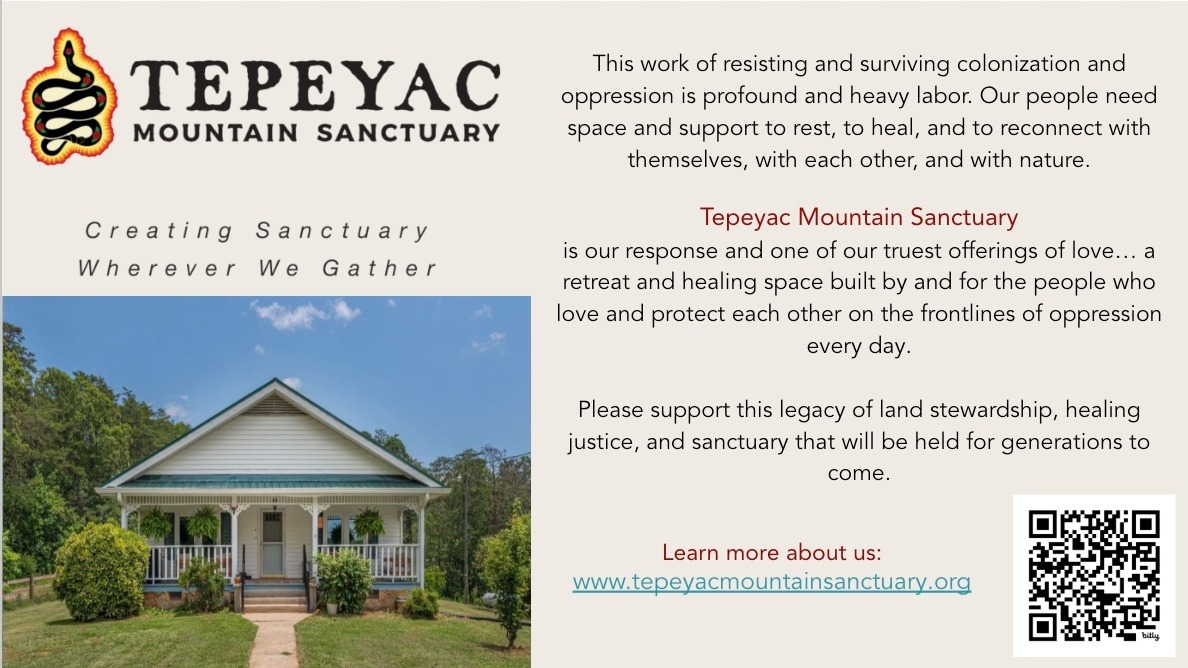
As I shared a couple of months ago, Tepeyac Mountain Sanctuary is coming to fruition. You can donate here.

Thanks for reading! If this was forwarded to you, you can subscribe to my email list on the homepage of my website. I publish something once a month. Onward.


