
Sometime in the early 2000s, my moniker became “ukulele rockstar.” During that period of my life, weekdays were spent working for a social justice oriented nonprofit, while weekends and vacations found me on a wide variety of stages. With my sweetheart at my side, commanding whatever instrument he played, I’d jump around in striped tights, strumming the ukulele, singing upbeat songs about love and death. We played clubs and coffee houses, festivals and house concerts, listening rooms and dance parties. Music opened doors for me, internally and externally.

Through music, I discovered my capacity for brave vulnerability and joyful abandon. It opened up my voice. I found greater confidence and humility. Becoming a musician gave me deeper access to music’s medicine. Medicine that is most potent when shared. It introduced me to people and places I would never have known otherwise, and offered ways of communicating and connecting previously unavailable.
Now, in 2026, we are facing the rapid acceleration of AI, with the dangerous ways it extracts and exploits natural and intellectual resources. I do not believe the “benefits” outweigh the costs. At the end of the day, you can’t eat AI. In the same way, it doesn’t offer real food for the soul. AI can never replace the spiritual nourishment we get from organic art – like live music.
There is music in birdsong and babbling brooks and other melodies from the more than human world, though what’s on my heart today is human made music, shared in person. This ancient human technology can alchemize emotions. It is a portal to the divine. Live music experiences are often moments of transcendence.
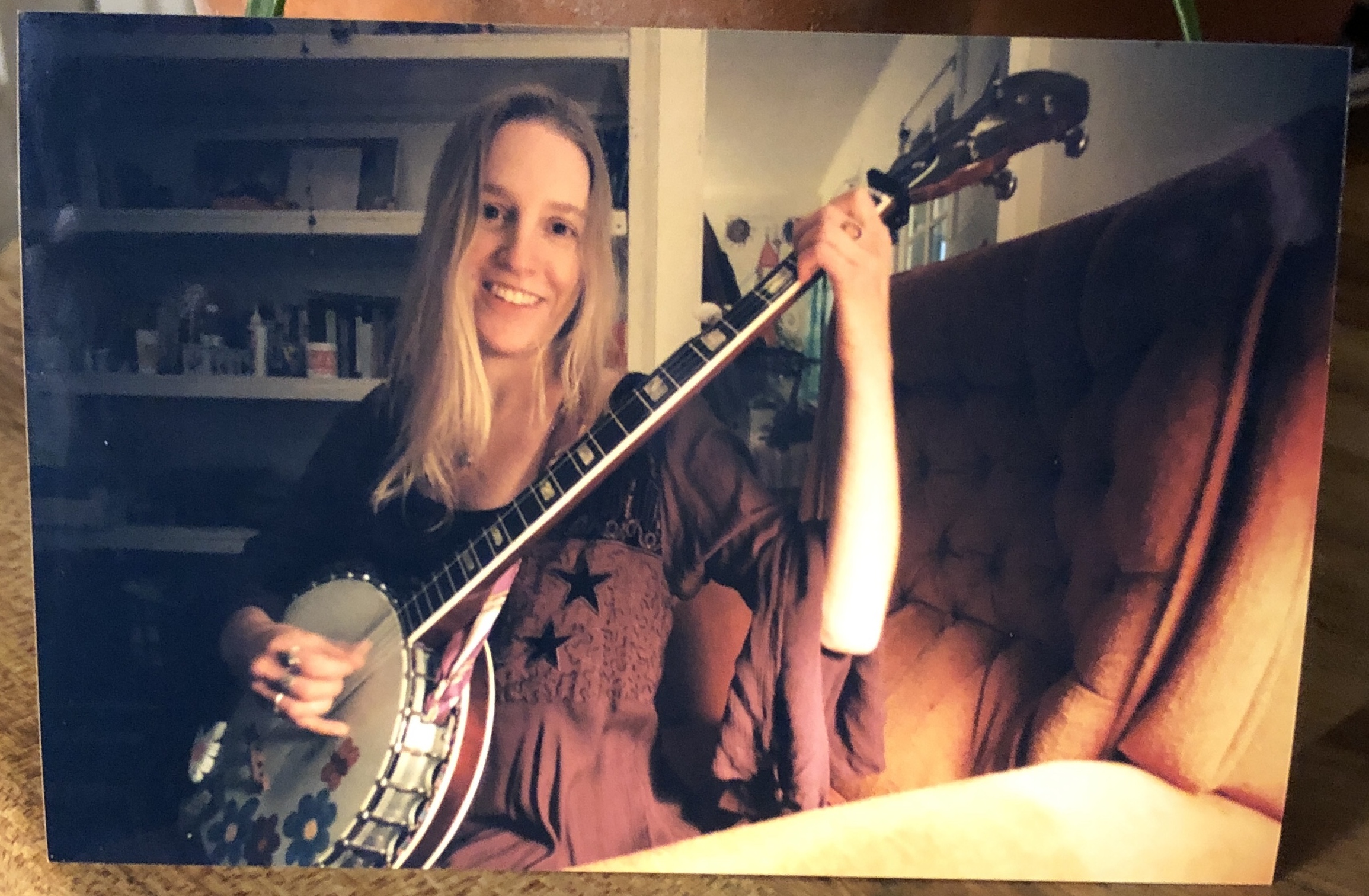
I started playing music when I was in my late 20s, after meeting the members of the band Snake Oil Medicine Show (SOMS) and their community. Though of course I’d been to concerts before, I had been distant from the actual playing of music. All of a sudden, I was dropped into situations where people sat around and “jammed,” playing songs and tunes for the sheer joy of it. I was enchanted. Seeing these new friends perform on stage was a particular thrill, and I followed SOMS to shows in far flung locations. Before long, I had picked up the banjo and started to write songs.
A significant plot point is that one of the members of SOMS was Jason Krekel, who I fell in love with. He became my boyfriend and music teacher. Honestly, a primary motivation for learning to play music was so I could share that form of expression with him, as it is central to his life. It connected us.
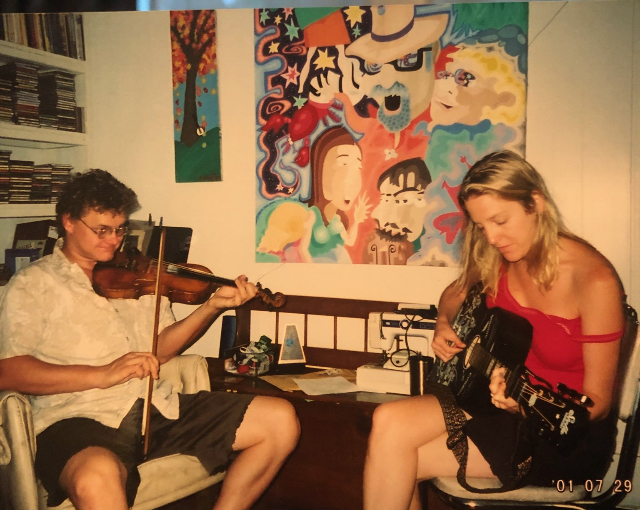
Luckily for me, Jason appreciated my songwriting. As new lovebirds, in 1999 we spent days and days at our house recording my songs and poetry. The end product was a cassette tape entitled “For Posterity’s Sake.” It was the start of our musical journey together.
In those early days, we also got into old time music, a genre developed in this region with diverse roots which I’ve written about before. Old time jams often involve players creating a trance-like groove. We spent endless hours playing this music with others at our house, at parties, and at old time festivals like Mt. Airy and Cliff Top. Those tunes hum inside me still.
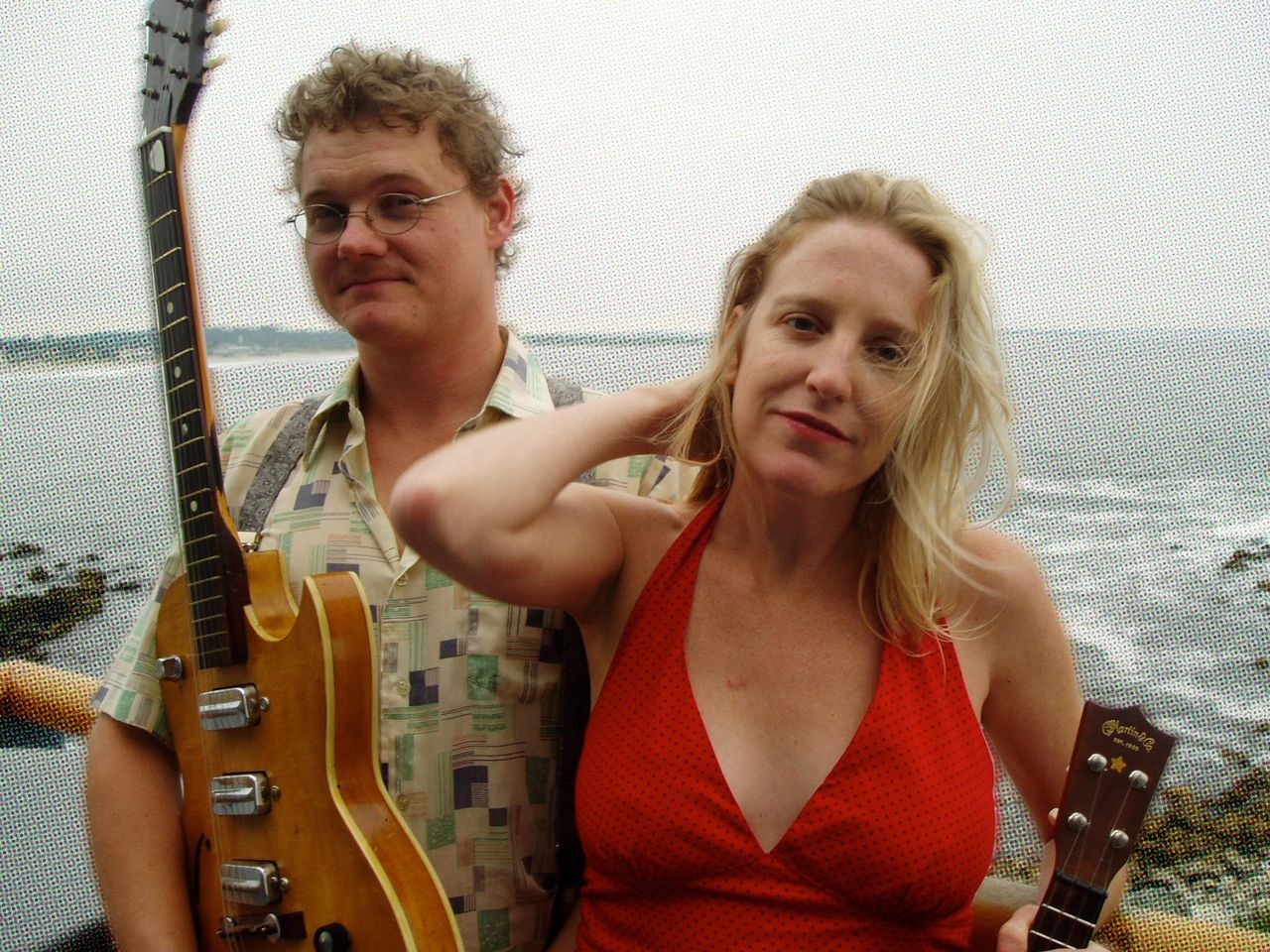
By 2004 Jason and I had released our first studio album, “73% Post-Consumer Novelty,” under the name Mad Tea Party, and had started to play more shows. At that point Jason had left SOMS and joined the Larry Keel Experience, and was on the road a great deal. Then, as now, he played with numerous bands. But we maintained our musical project together.
It was an exciting time for live music in Asheville, and we were on the scene enough to have played at the storied venue Vincent’s Ear on numerous occasions. By 2008, we found ourselves on the cover of the Mountain Xpress.

As proud as I am of our cultural contributions, one could also say we played a role in Asheville’s gentrification. We were part of a wave of DIY happenings, bringing energy to neglected spaces, and developing a scene that would eventually be co-opted by the tourism machine. The commodification of local culture for visitors has fueled rising housing costs and displacement. I was not aware of those mechanics at the time. In retrospect, I cringe.

The 2000s rolled on and we kept performing and putting out recordings and the role of the band in our lives grew. I picked up guitar and keyboard, but the ukulele defined our sound. While I continued my nonprofit job and community projects, I was equally focused on music.
Looking back, I see how I kept these two significant parts of my life separate. Perhaps that was because younger me, with a developing political analysis, did not trust my ability to translate my positions to all audiences. Similarly, in social justice spaces, I thought I needed to show up in a serious manner, and not bring my wackier side to the work. While of course we all bring different parts of ourselves to different parts of our lives, today I am happy to have more fully integrated my inner multitudes.
Our act was whimsical and fun, with music that changed over time. We started out as a novelty jazz act, with kazoos and slide whistles, had a folk-y listening room phase, and ended up playing electrified roots rock, getting kids dancing at clubs and rockabilly festivals.
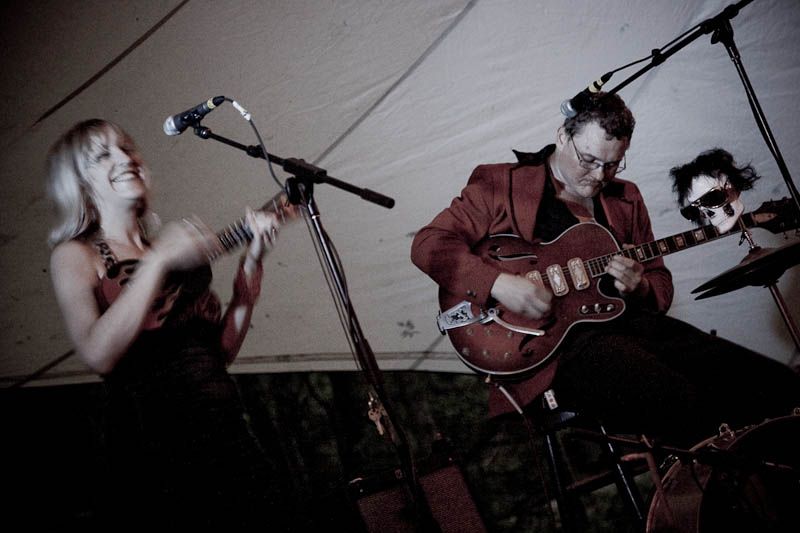
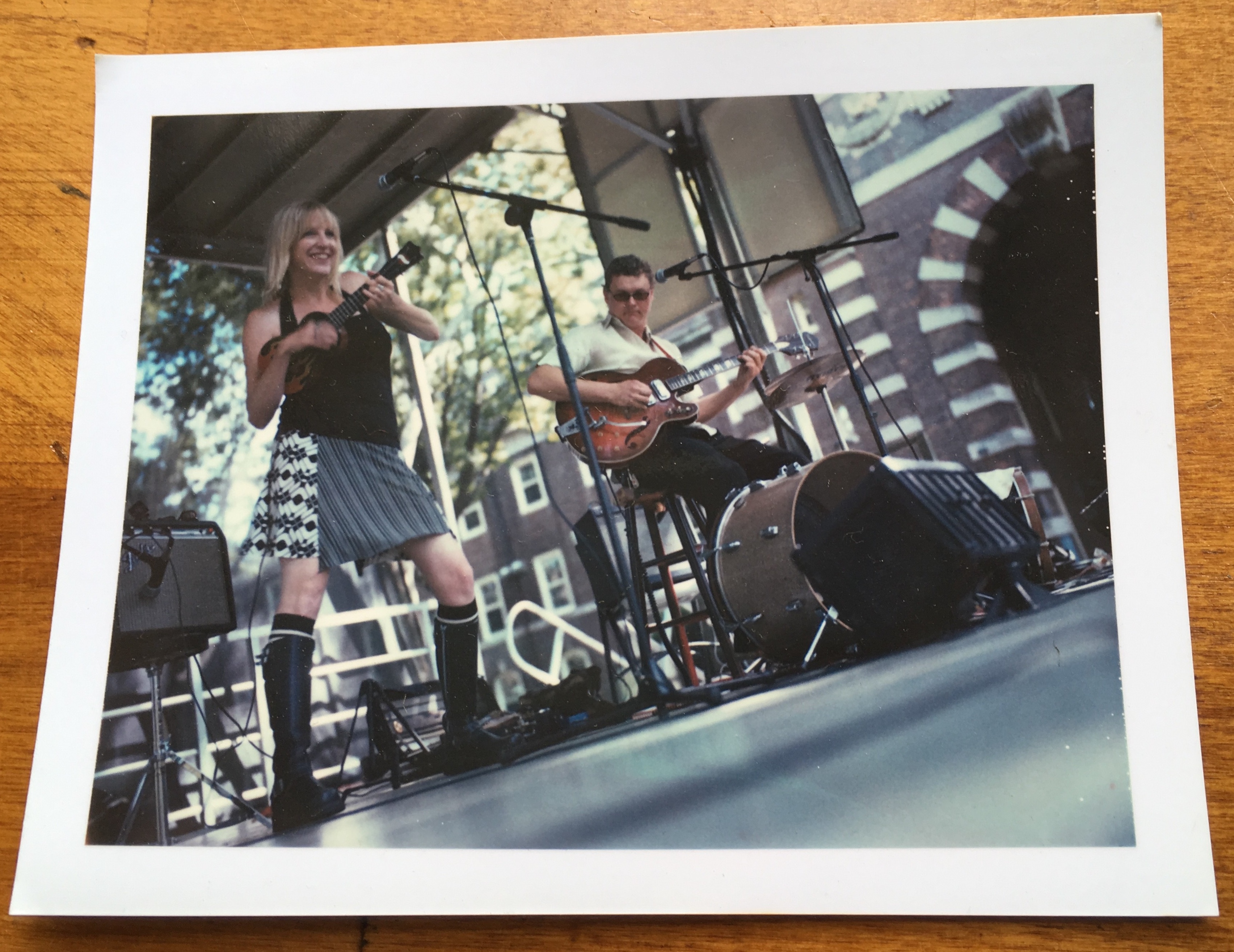

We embraced the adventure of touring and playing music professionally. For a while, our band was a small business, with a booking agent and a manager and merch and tour van and all that. We grew a sweet fan base. There were extreme ups and downs of the whole endeavor, all of it memorable.
One day would bring the heartbreak of terrible sound and the resulting unresponsive audience, the next the thrill of an enthusiastically received set in a gorgeous venue, with a dancing crowd yelling for an encore.
It’s interesting to consider how our band began as the internet started to be a part of our lives. We went from cassettes to CDs to downloads and printed flyers to MySpace posts to all the mess we have now. I’ll never forget reading The Future of Music: Manifesto for the Digital Music Revolution in 2005. I had a hard time wrapping my head around the prediction that we would eventually pay for music like any other utility, able to turn on a tap from which would flow all recorded music. While I appreciate this easy access, I also miss the days of seeking out the recordings I wanted to hear.
During our years of touring, we saw the economic model and listener experience of music completely change. The internet and cell phones and social media have altered how we interact with the world, and music is no exception.
Yet live music continues to require human bodies and hearts.
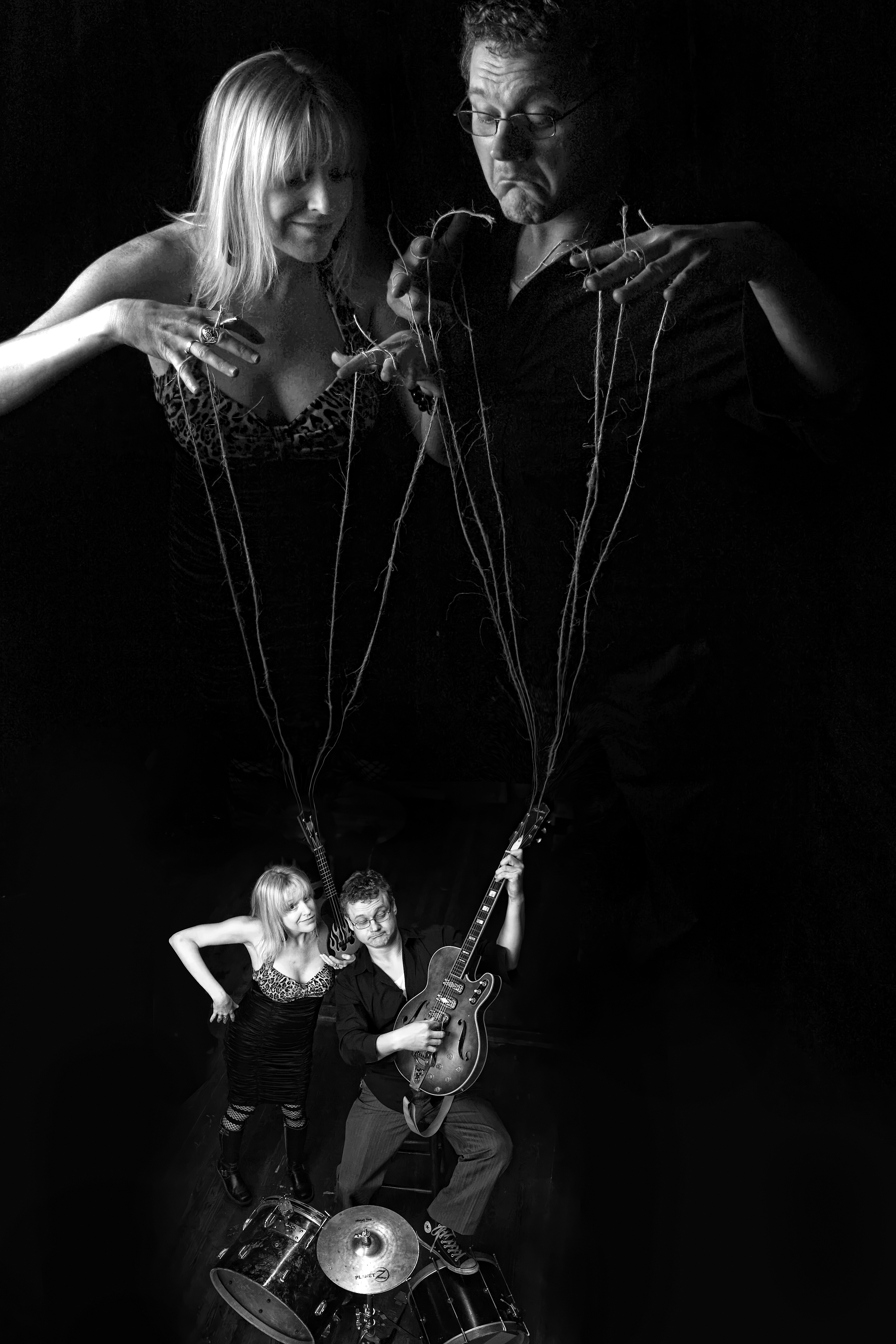
Looking back, I am amazed at all we did, and proud of our music and performances. I’m grateful for the recordings we made – our Bandcamp page has 15 albums and EPs, many which are available on CD or vinyl. Loving musical documentation.
Eventually touring became unsustainable, and in Jason’s case unnecessary, as he built a thriving career playing locally with different bands. My focus changed. After a significant awakening around structural racism, I left my nonprofit job in 2016, and began intentionally collaborating with grassroots leaders of color.

When I first started “blogging” in 2008 my publication was called “Ukulele Rockstar.” I shared news about our band, what I was listening to, silly selfies, and touring adventure stories. Around the time I left my nonprofit job I launched “Asheville Action,” a new publication which focused on local initiatives and opportunities for advocacy. Then, as “Asheville” was being used by so many platforms, and because I wanted to share controversial opinions while making it clear they were my own, I changed the title of this publication to my name.
Still, with my choice to prioritize supporting communities most impacted by systems of oppression, I also chose to move behind the scenes, taking pictures rather than being in them, ghostwriting for projects I was part of rather than putting my voice forward (other than in these essays). Eventually the ukulele went into the closet.
Highlighting others’ work has stayed a priority, though I’m curious if this moment calls for me to recall my rockstar self and weave in more whimsy.

We are not going to analyze ourselves out of oppression. While the horrors pile up, imagination and creative expression can transport us to the world we want. Songs can help us survive.
In a society being overwhelmed by AI, I am extra thankful for organic art like live music. I am remembering that, in addition to being an ally and an activist, I am an artist. Every goofy song I sing is an alternative to artificial ick.
Happily, I continue to play music with Jason, mostly at home or around campfires, though we do still perform on occasion. Intimate sessions are opportunities for tender connection and musical exploration. Performances are a generative way to engage with our greater community. Several years ago we changed our band name to Krekel and Whoa, so perhaps you’ll see that in a calendar listing one day, or read about an upcoming show here.
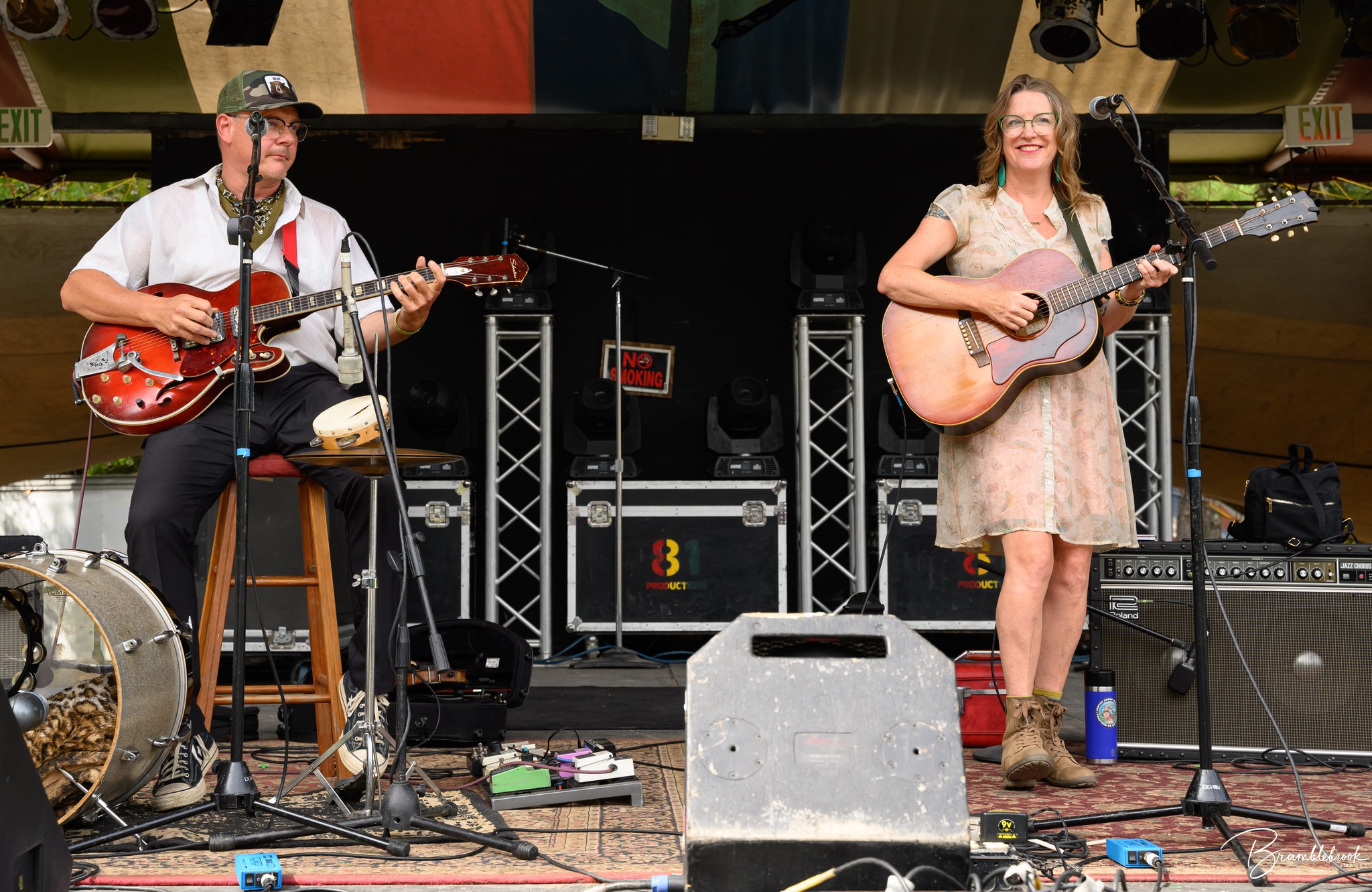
Jason is in a number of bands, and performs all the time. You can find his schedule at jasonkrekel.com. One particularly fun show he plays is with Bam-A-Lam on the second Wednesday of every month at 5 Walnut, 8 to 10 pm. Check them out, smiles guaranteed.
As uncertainty increases, the magic of music feels all the more essential.
(Cover photo taken by Jamie Harmon at the Doo-Nanny.)

Thanks for reading! You can subscribe on the homepage of my website. These days I publish something once a month. Onward.
Gratitude to Heather Laine Talley, my brilliant creative compa and treasured friend, for her helpful input on this essay, and for the abundant inspiration and love she brings to my life.


Thank you for sharing your history to where you are today. It is not easy to open up like you did. I’m grateful to live in a community that has people like you, Ami. Thanks for your honesty and all you do.
LikeLiked by 1 person
I just love you.
Thank you for this.
I’m a fan of all of your rockstar manifestations, including the grantwriting rockstar.
LikeLiked by 1 person
Stunning! Beautiful and love this and you so much! Thanks for sharing your heart with us. 💗💗💗
LikeLiked by 1 person
Fuck Yeah!! I Am The Bling still plays on repeat in my head. You’ll always be a Rockstar to me!! So glad I got to tag along on some of those adventures!
LikeLike